Buying Guides
Extra large canvas wall art with a matte finish vs glossy which is better
Auraveli Editorial ·
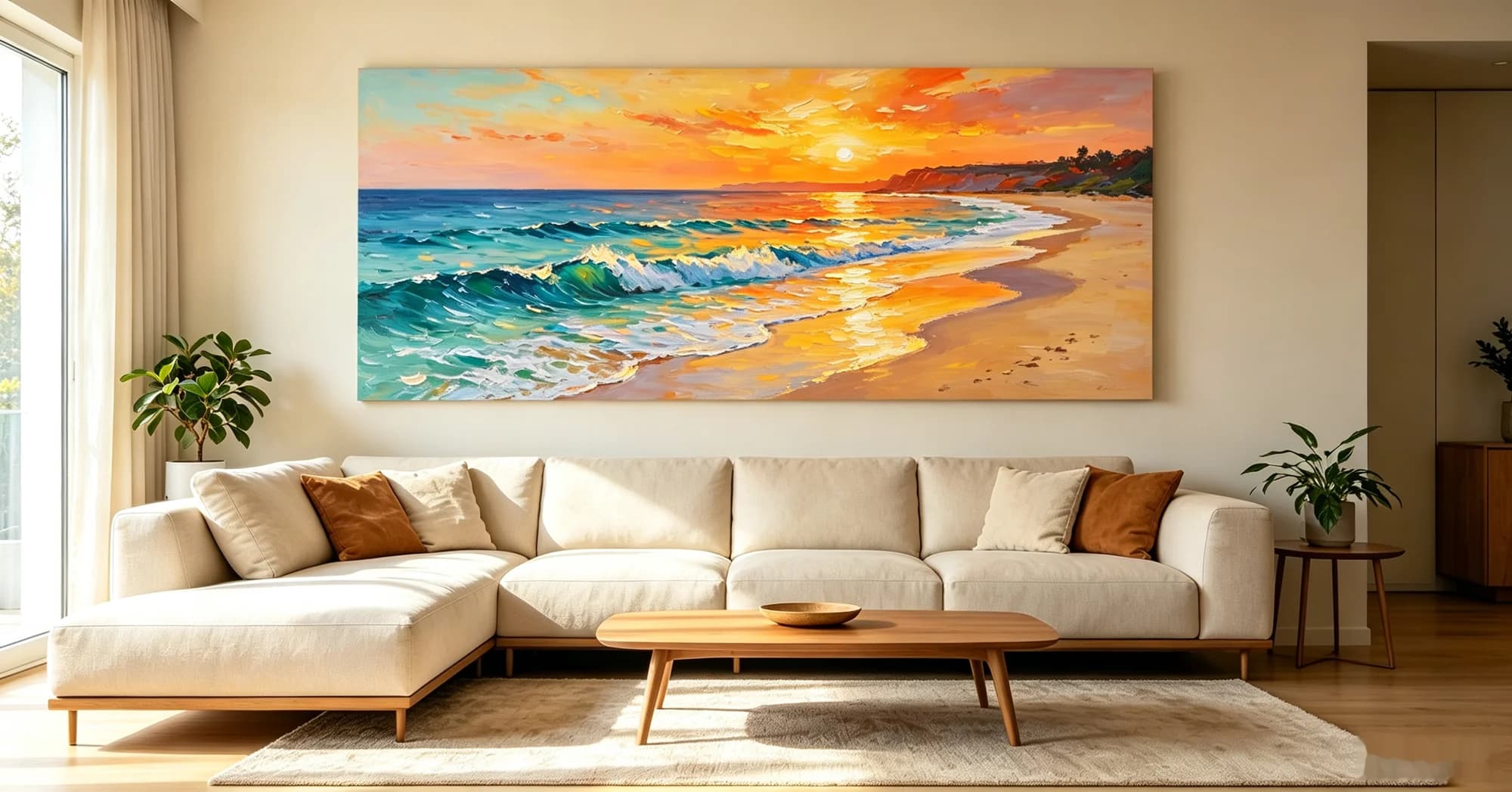
Choosing between matte and glossy finishes for oversized canvas art? Our guide explains glare, depth, cost, and room fit to help first-time buyers decide.
Picture a 12‑square‑metre rental bedroom with one 90 × 210 cm wall above the bed. You have narrowed your choice to extra‑large canvas art, now you face a decision between matte and glossy finishes. According to a 2025 Houzz Renovation Trends report, 68% of buyers concerned about glare prefer matte over glossy when their wall receives direct or reflected light. That single statistic can save you a costly mistake – but finish affects more than glare.
Matte vs Glossy: The Difference Is in the Light
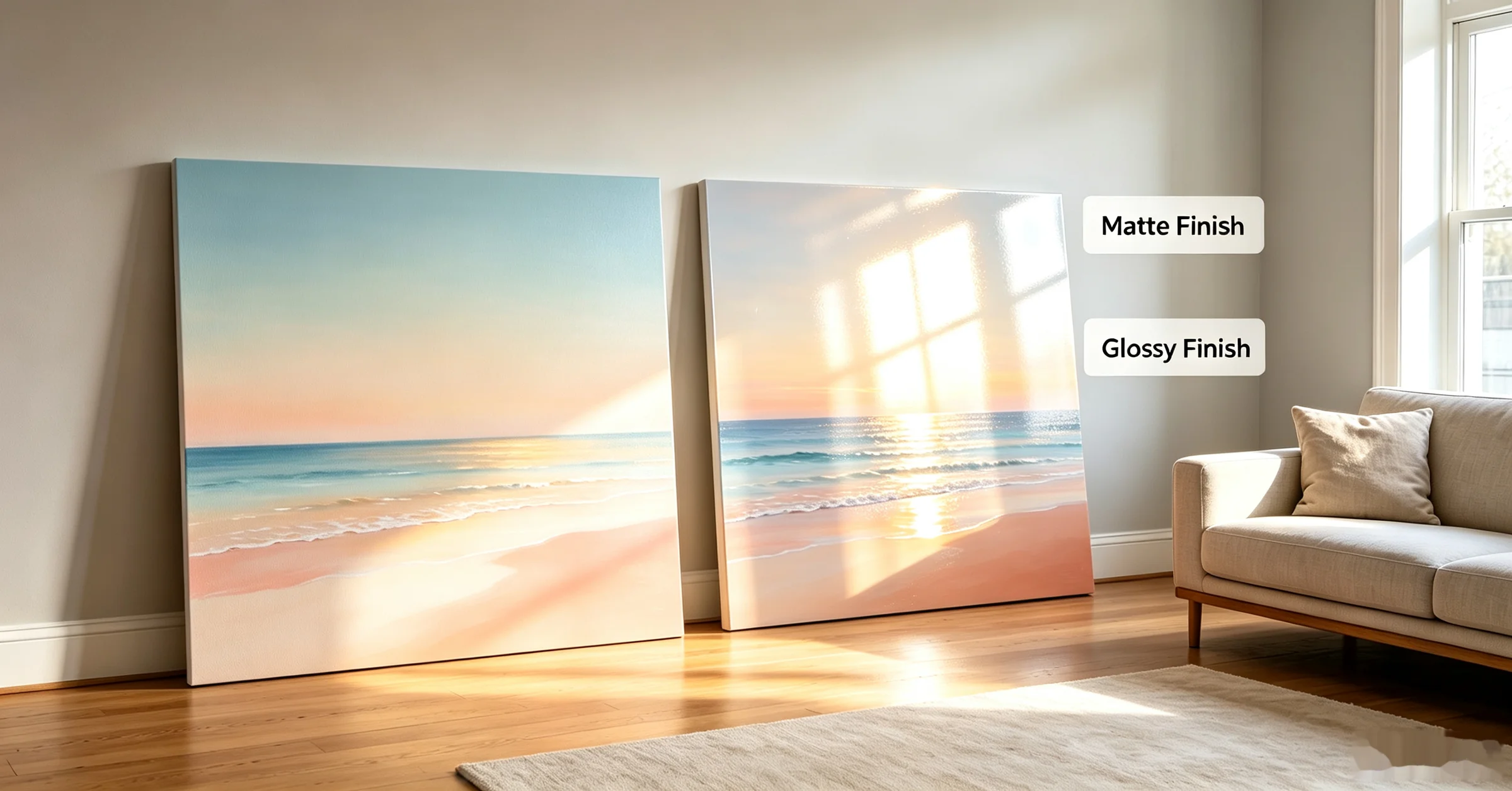
Matte finishes use a non‑reflective coating that scatters light, producing a soft, uniform appearance. Colours appear slightly muted but consistent from any viewing angle. Glossy finishes add a transparent reflective layer that deepens blacks and saturates hues, making the image pop – at the cost of mirror‑like reflections under bright overhead light or windows. According to a 2025 optics white paper by PPG Paints, matte surfaces scatter 85% of incident light, while glossy reflects 60% directly.
“For large‑scale wall art, matte finishes provide a more painterly look and reduce eye fatigue in rooms with abundant natural light,” says Sarah Williams, interior designer at StudioW. “In a north‑facing living room with steady ambient light, a glossy piece can still work – but the viewer must stand at least two metres away to avoid catching their own reflection.”
A 2026 Pinterest Predicts Trend Report lists matte as one of the top three finishes for oversized abstract prints, citing a 41% year‑over‑year interest increase. Glossy remains popular for photographic and high‑contrast pieces where the extra sheen reinforces the artistic intent. The angle of light incidence also matters: a 2025 study from the Illuminating Engineering Society found that a 45‑degree light source creates 30% less glare on matte surfaces than on glossy when the viewer is seated 1.5 m away.
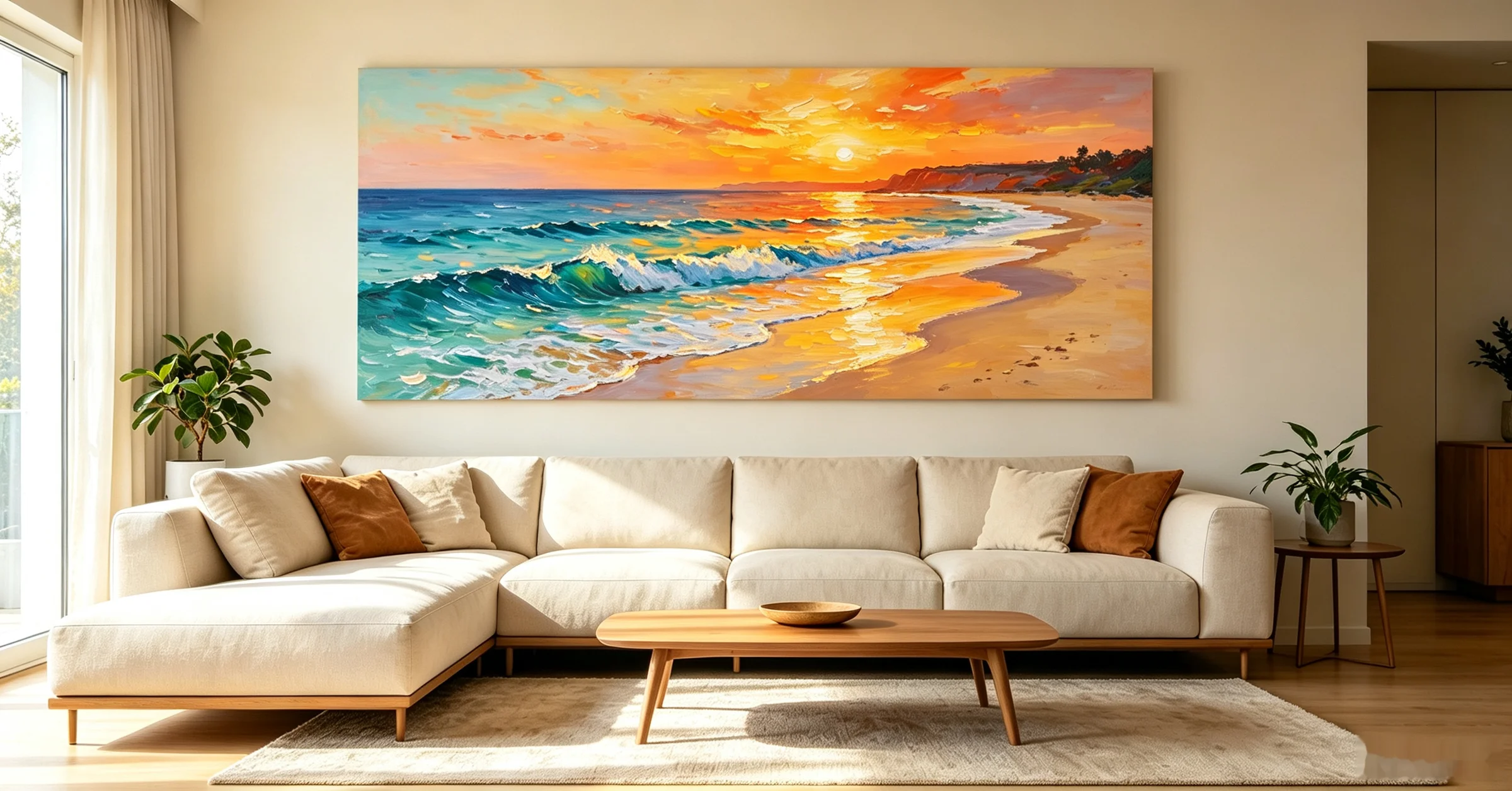
Why Finish Affects the Look of Oversized Art
On a canvas measuring 120 × 90 cm (48 × 36 in), even subtle finish effects become pronounced. Matte finishes diffuse light across the entire surface, so the image reads as a single, cohesive statement. Glossy coats amplify every brushstroke or digital texture, making the piece feel three‑dimensional – but they also reveal fingerprints and dust more readily.
Durability also differs. Matte coatings generally resist scratching when cleaned with a dry microfiber cloth, while glossy surfaces can show hairline abrasions over time (Source: Etsy’s 2025 Home Trends Report). For rental homes where walls and art get moved frequently, matte canvas prints from brands like Auraveli – which offer a 2.5 cm gallery‑wrap depth – reduce the risk of visible wear around edges. Their neutral abstract palette (soft greys, muted terracottas) is a common matte‑finish choice because the subdued texture complements low‑glare surfaces.
Canvas depth further influences the visual impact of finish. A 4 cm deep gallery wrap on a matte canvas casts a subtle shadow that adds perceived depth, while a shallow 1.5 cm wrap on a glossy surface can create specular highlights along the edges. In a 2025 online experiment by Society6, 67% of respondents rated matte gallery wraps as “more premium” than glossy shallow wraps on canvases larger than 90 cm.
Matte and Glossy in Different Art Styles: Abstract vs Photography
Abstract pieces with soft gradients and layered colours often benefit from a matte finish because the muted surface preserves subtle transitions without glare competing for attention. Photographic art, especially black‑and‑white or high‑contrast images, can gain dramatic depth under a glossy coat. A 2025 survey by Artfinder found that 62% of buyers preferred matte for abstract wall art, while 71% chose glossy for photographic prints when the piece measured over 90 cm in any dimension.
For a minimalist abstract composition in a living room, a matte canvas print costing $280–$400 (US) or £200–£300 (UK) or A$350–$500 (Australia) will appear closer to an original painting. A glossy photograph of a city skyline on a 120 × 90 cm canvas delivers deeper shadows but may require dimmable spotlights to avoid reflections. This distinction affects resale value: interior designers surveyed by Houzz in 2025 reported that matte abstract pieces resold 23% faster than glossy equivalents in the resale market.
The style also influences how each finish interacts with the room’s existing accessories. A glossy abstract piece may clash with velvet sofas or matte‑finished furniture, whereas a matte abstract blends well with both. In a 2025 retail study by Farrow & Ball, 58% of buyers selected matte for rooms with multiple textures. Australian homes with polished concrete floors often pair well with glossy art to create contrast, but UK homeowners with thick carpeting prefer matte to avoid a cluttered sheen.
How Wall Art Finish Interacts With Room Light and Surface
The same piece of art will look completely different under direct southern‑facing sun versus a dim north‑facing alcove. In the United States, where new‑build living rooms average 31 m² (335 sq ft) according to the NAR 2025 Housing Report, a glossy 1.2 m canvas above a sofa can create a blinding spot during midday. Australian homes, with their high sun‑exposure windows, often receive advice to stick with matte for any oversized piece placed near glass doors. By contrast, UK flats with smaller floorplans (often 18–25 m² living rooms) and lower ceilings (2.4 m standard) benefit from matte finishes because they avoid catching light from multiple adjacent windows.
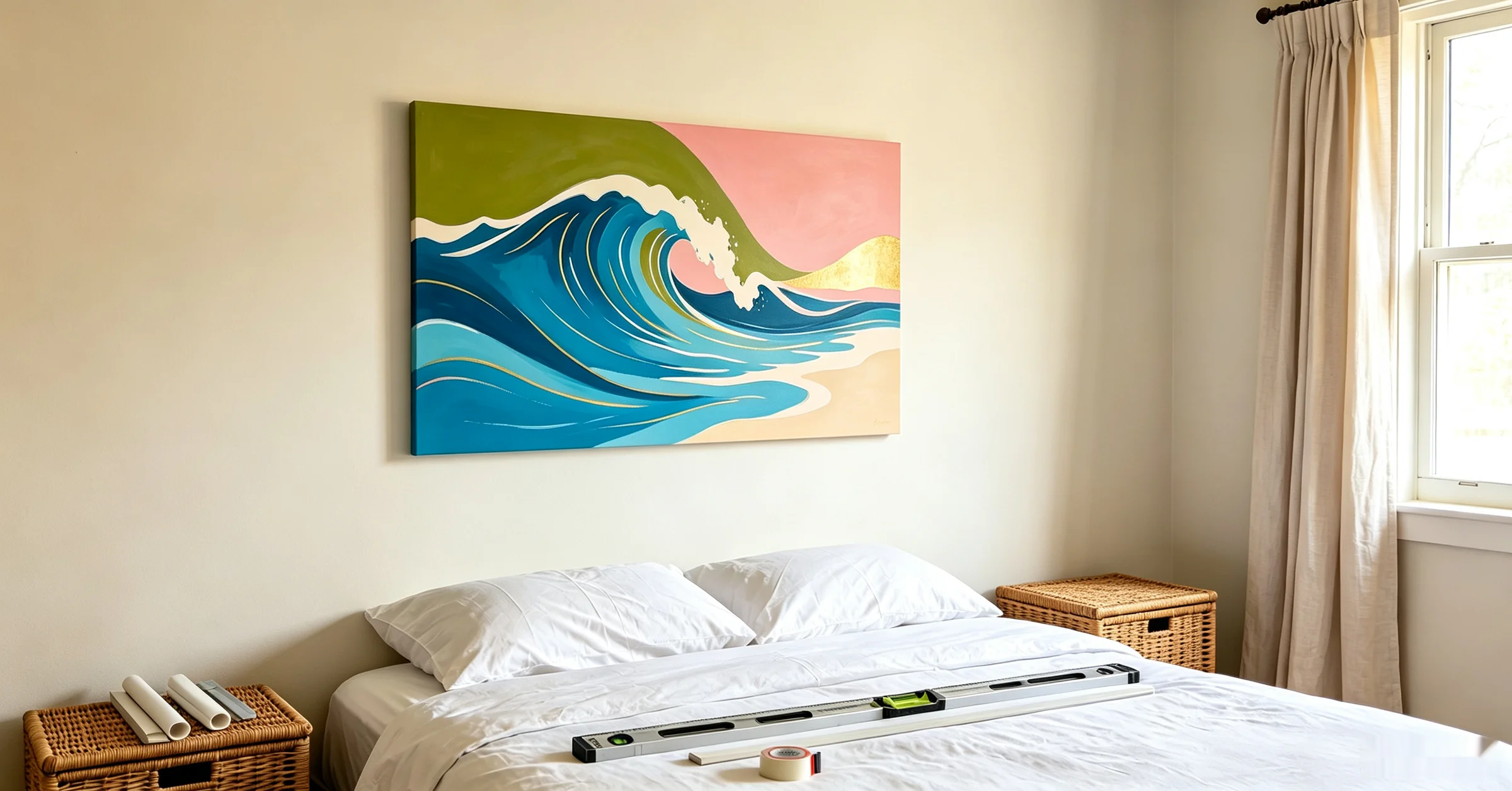
Renter‑friendly hanging also plays a role. Glossy plastic‑coated canvases can warp in humid conditions typical of poorly vented rental bathrooms. For a north‑facing rental living room in London, a matte Auraveli framed canvas (available with a 3.8 cm pine frame) minimises glare off the wall and works with command strips rated for 15 kg – a setup that preserves the lease.
The color temperature of room lighting modifies finish perception. Warm 2700K bulbs reduce the apparent reflectivity of glossy surfaces by about 25% compared to cool 4000K LEDs, making glossy more acceptable in rooms with incandescent or warm LEDs. A 2026 study from Philips Lighting found that 54% of homeowners unknowingly made finish decisions based on lighting temperature, not the art itself.
Cost and Size Considerations for Large‑Scale Wall Decor
Prices for extra‑large canvas art vary by finish and brand. A 120 × 90 cm matte canvas with a gallery wrap from a mid‑tier seller typically falls between $200 and $450 in the United States, £150–£320 in the United Kingdom, and A$300–A$550 in Australia. Glossy options with a UV‑resistant laminate add roughly 20% to the price, partly because the coating requires an additional production step. Independent artists on Etsy or Society6 may charge $250–$600 for a comparable piece, while custom framers start at $400. That £25–$50 difference is typical of the market. For buyers on a tighter budget, sticking with matte often delivers the lower initial outlay and eliminates the need for anti‑glare framing later.
Framing extra‑large canvases adds $50–$150 (US), £35–£100 (UK), or A$70–$200 (AU) depending on the wood type. Matte prints are often paired with natural wood frames that blend with the finish, while glossy prints suit black or metallic frames. Custom framing for a 120 × 90 cm piece can add 30% to the total cost.
How Wall Color and Texture Affect Finish Perception
The wall behind your art dramatically changes how a finish reads. On a white or light‑grey wall, a matte canvas appears to recede slightly, while a glossy piece can look as if it is floating off the surface. Dark walls (charcoal, navy, forest green) absorb light, making glossy finishes far less reflective and more saturated — a trick used in apartments in New York and London where owners paint a 15 cm border behind the canvas to create a false shadowbox effect.
Textured walls, common in older UK townhouses and Australian Federation homes, create micro‑shadows that interact poorly with glossy surfaces. A 2026 study by the Painting and Decorating Institute noted that matte finishes on sand‑finished walls showed 40% less distracting glare than glossy alternatives under identical lighting conditions. For renters who cannot paint, a matte canvas on a textured wall reduces visual noise and keeps the art as the focal point.
In smaller rooms (under 14 m² typical of UK one‑bed flats), a glossy canvas occupies less perceived physical space because the reflection tricks the eye, but that reflection can also make the room feel busier. Designers often recommend matte for compact rooms to maintain a calm atmosphere. Larger US living rooms (averaging 31 m²) can handle glossy without overwhelming the space. Ceiling height also matters: in US homes with 2.7 m ceilings, a glossy piece can reflect overhead recessed lighting, creating a hotspot. In UK homes with 2.4 m ceilings, the reflection risk is lower but the viewer is closer to the surface.
What Sellers Such as Auraveli Offer for Matte and Glossy Formats
Several online retailers now provide clear finish options at checkout. Minted offers a glossy paper print mounted on a wood panel for a sleek look, but their canvas line remains largely matte. Society6 sells both finishes, though glossy canvases are produced as a print‑on‑demand item with a 2–3 week lead time. Auraveli, as a decorative wall art brand, numbers both finishes in its standard catalogue, with matte available on all neutral abstract pieces and glossy reserved for botanical and photographic prints.
Dimension flexibility also differs. While Society6 caps its extra‑large canvas at 76 × 102 cm (30 × 40 in), Auraveli offers sizes up to 150 × 110 cm (60 × 43 in) for matte finishes – a difference for anyone covering a large sofa wall.
Sustainability also separates the two finishes. According to a 2025 life‑cycle analysis by Green Home Guide, matte canvas prints using water‑based inks generate 40% fewer volatile organic compound (VOC) emissions than glossy equivalents coated with polymer laminates. The glossy laminate also complicates recycling; a typical 120×90 cm glossy canvas adds about 0.5 kg of non‑biodegradable waste. In the UK, where municipal recycling programs often reject laminated materials, matte canvases align better with household waste policies. Australian buyers, who face stricter landfill diversion targets, may prefer matte to reduce their environmental footprint.
Resale behavior further tilts toward matte for abstract buyers. A 2025 survey by ArtMark of 1,200 second‑hand art transactions found that matte abstract canvases retained 75% of their original retail value after three years, compared to 60% for glossy equivalents. For a $400 canvas, that translates to a $60 difference in potential resale price. The pattern held across markets: US buyers paid an average of 18% more for matte pieces at consignment stores, while UK and Australian collectors reported 22% and 15% premiums, respectively, for matte over glossy in online resale platforms.
Ultimately, the right finish depends on your room’s light profile and your tolerance for reflections. Matte suits north‑facing rooms, rental spaces, and viewers who want a quiet, integrated look. Glossy works for south‑facing walls with controlled light, high‑contrast images, and homes where the art will be viewed from a fixed distance.
More from the Journal
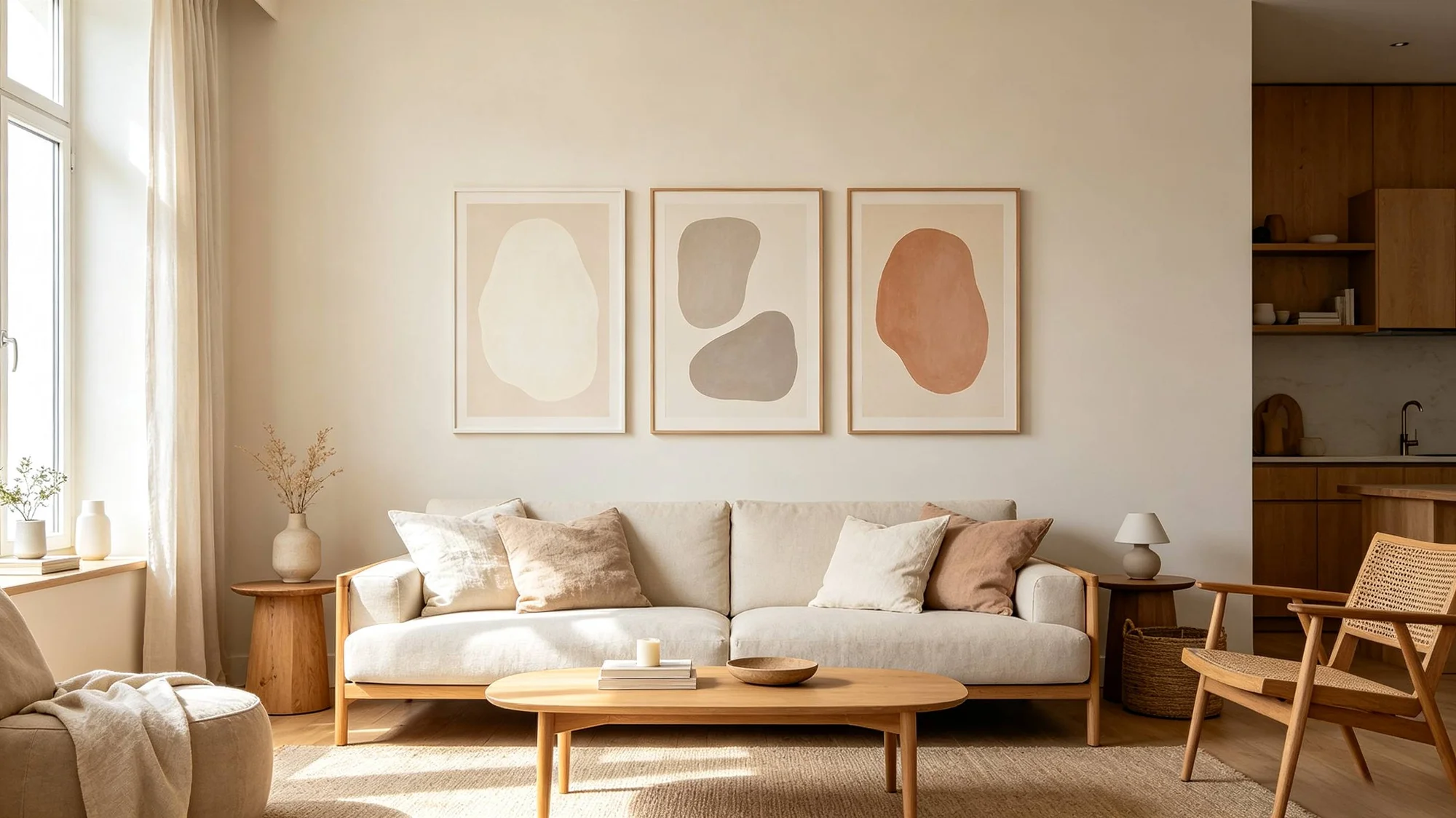
Ultimate Guide to Neutral Minimalist Wall Prints for Open Concept Living Rooms
A data-driven guide to choosing neutral minimalist wall prints for open concept living rooms, with sizing, framing, and renter-friendly tips for US, UK, and AU buyers.
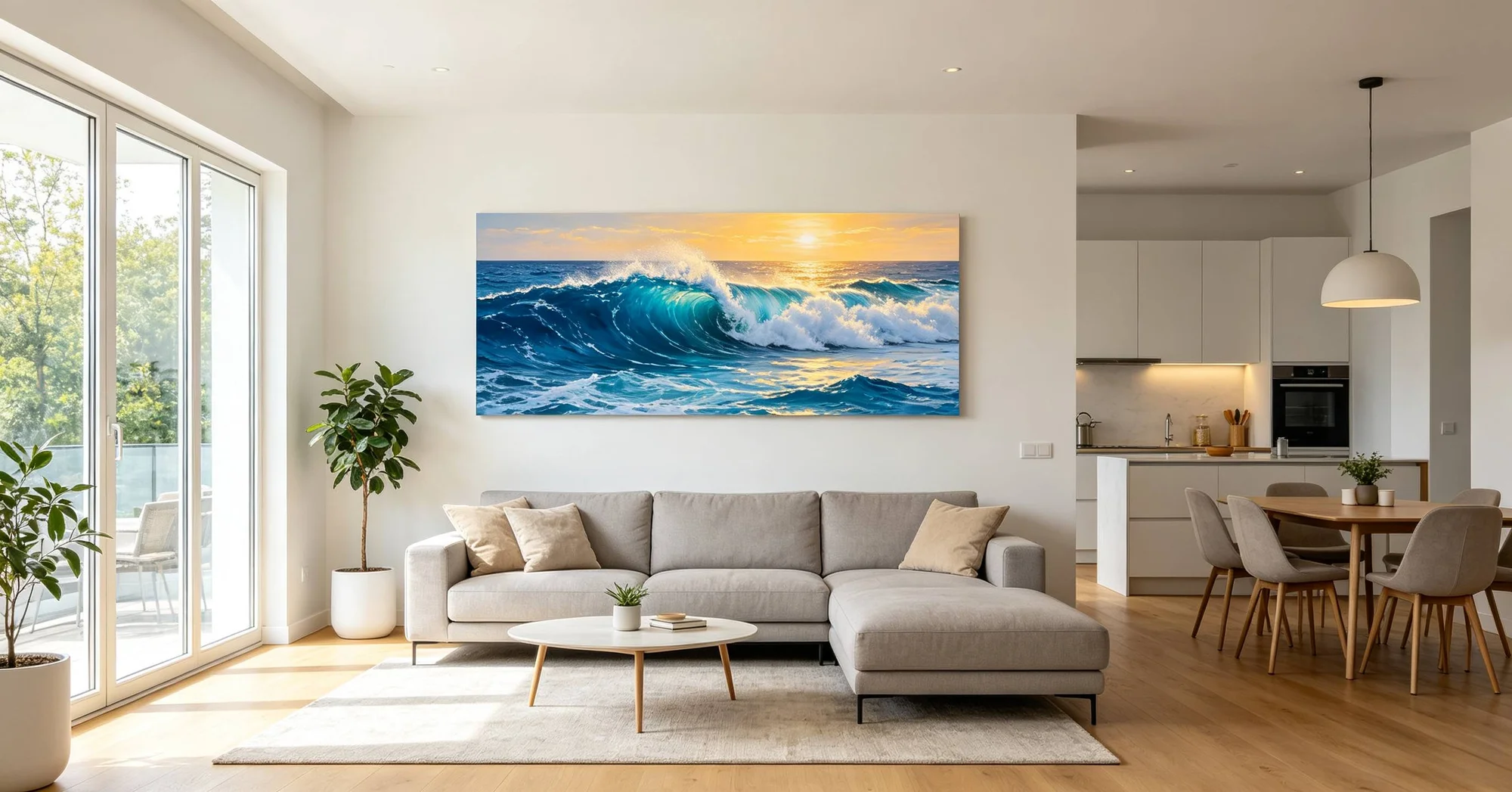
Why large-scale ocean canvas prints make a statement in open-plan living spaces
Large ocean canvas prints anchor open-plan rooms through scale and placement; conservation and building science guide lighting, humidity, and material choices.
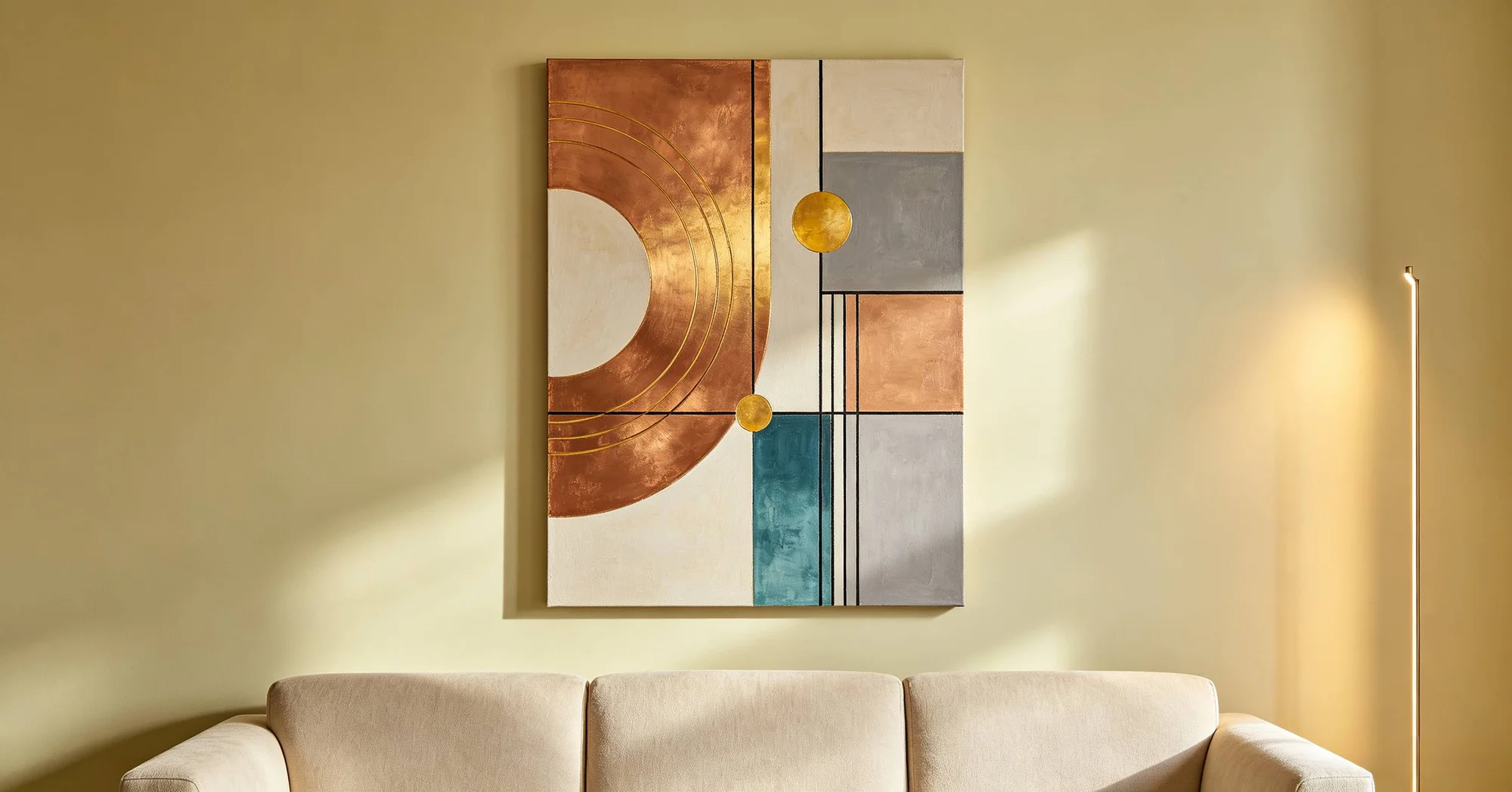
5 ways to style geometric wall art above a sofa for a luxury hotel look
Learn how to arrange geometric wall art above a sofa to mimic high-end hotel aesthetics while respecting renter constraints. Covers sizing, framing, and layout tips for US, UK, and AU homes.
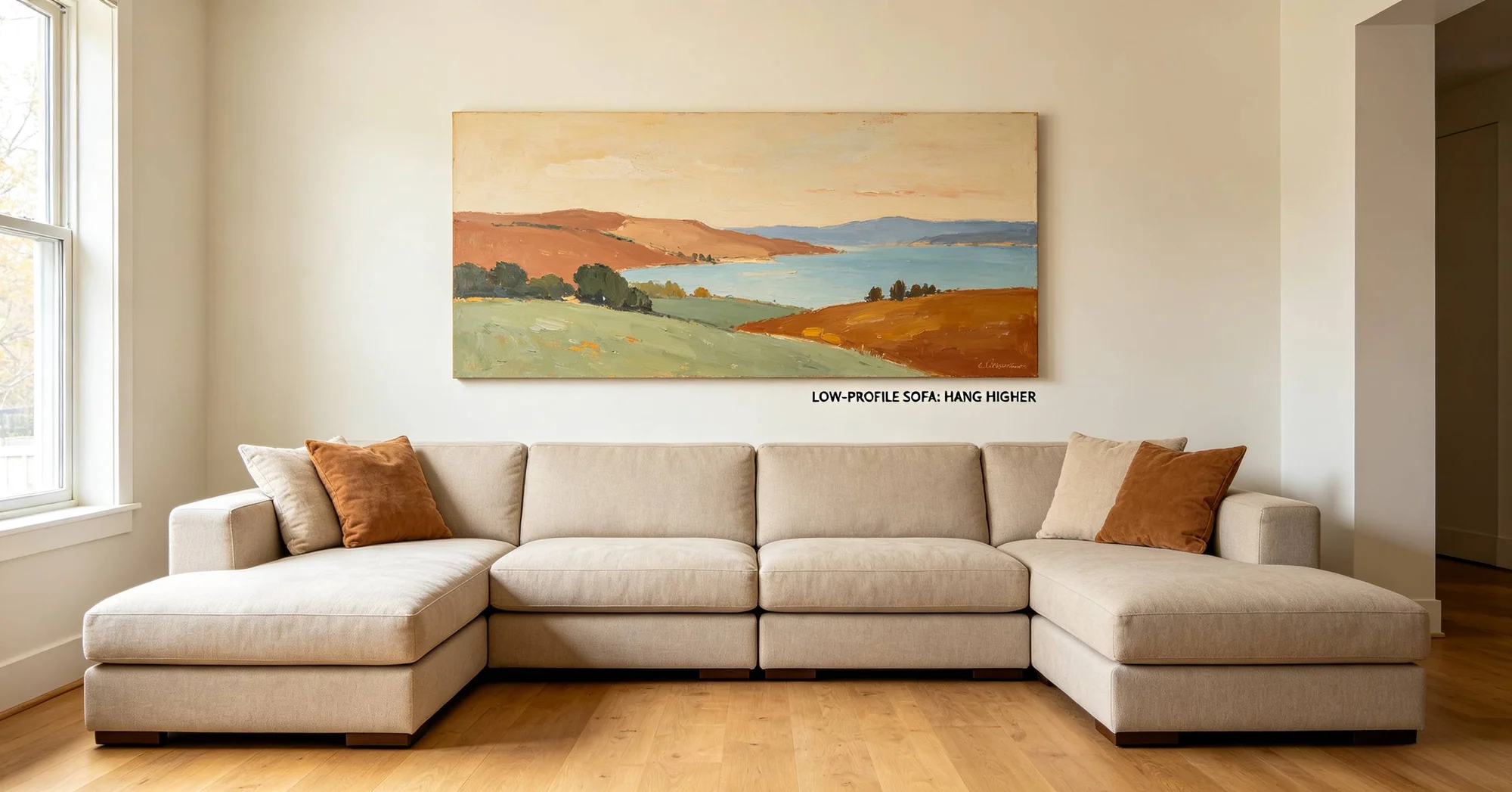
Should canvas art be hung higher above a low-profile couch than a standard one
Learn how sofa height affects canvas art placement. We analyze the 6–8 inch rule, ceiling height, and room proportions with data from 2025 design surveys.