Is large horizontal canvas art good for narrow living room walls?
Auraveli Editorial ·
Large horizontal canvas art can visually widen narrow living room walls if chosen at the right scale. We break down sizing, hanging, and renter-friendly options.
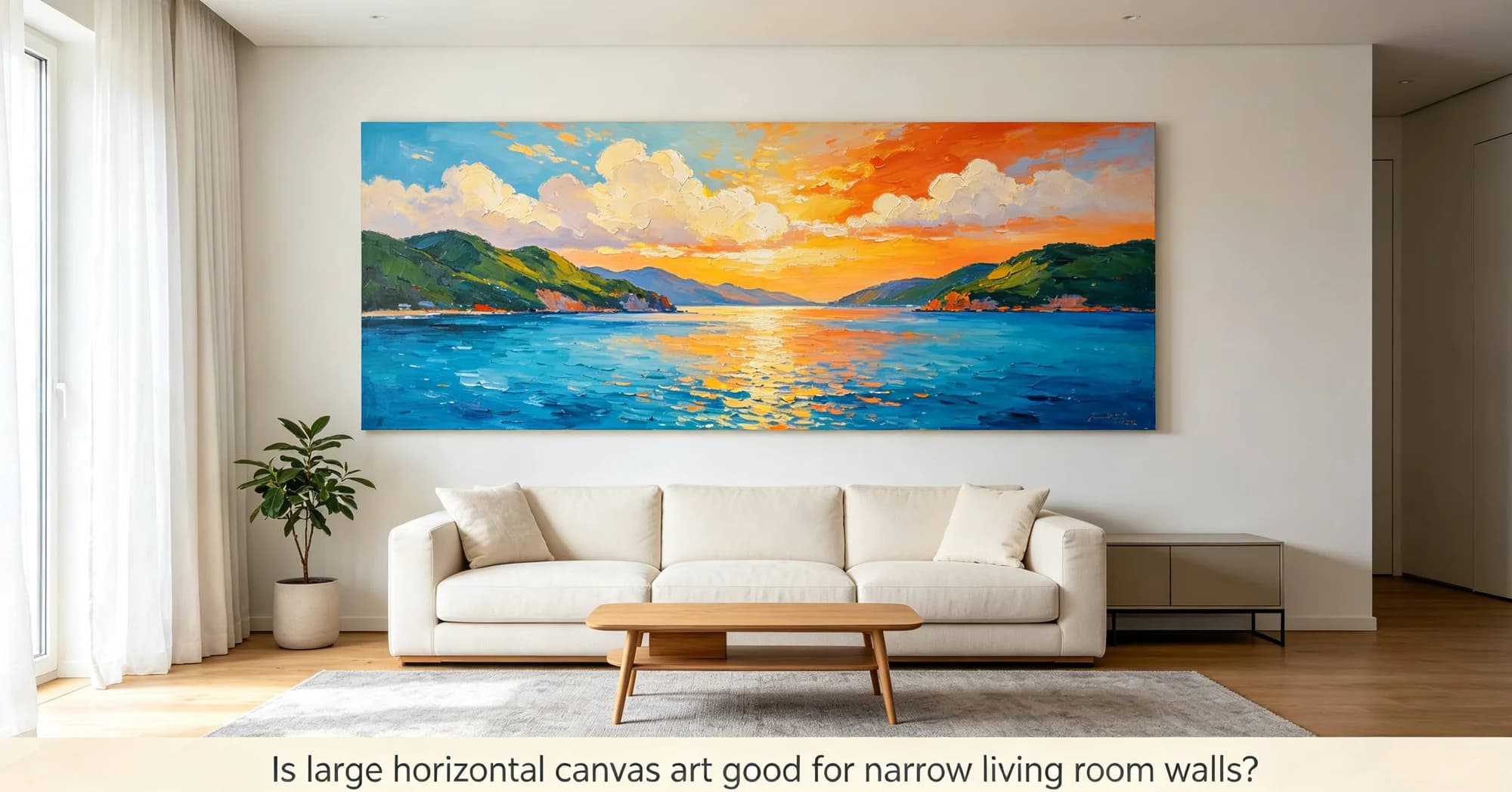
Most people assume a large horizontal canvas will overwhelm a narrow wall, but the opposite is often true. A 2025 Houzz survey found that 62% of respondents who used horizontal art on walls under 10 feet (3 m) wide said the room felt more spacious, not crowded. If your living room is long and narrow—common in many Brooklyn pre-war apartments, London conversions, and Sydney terrace houses—a single wide canvas can anchor the space and draw the eye across the room.
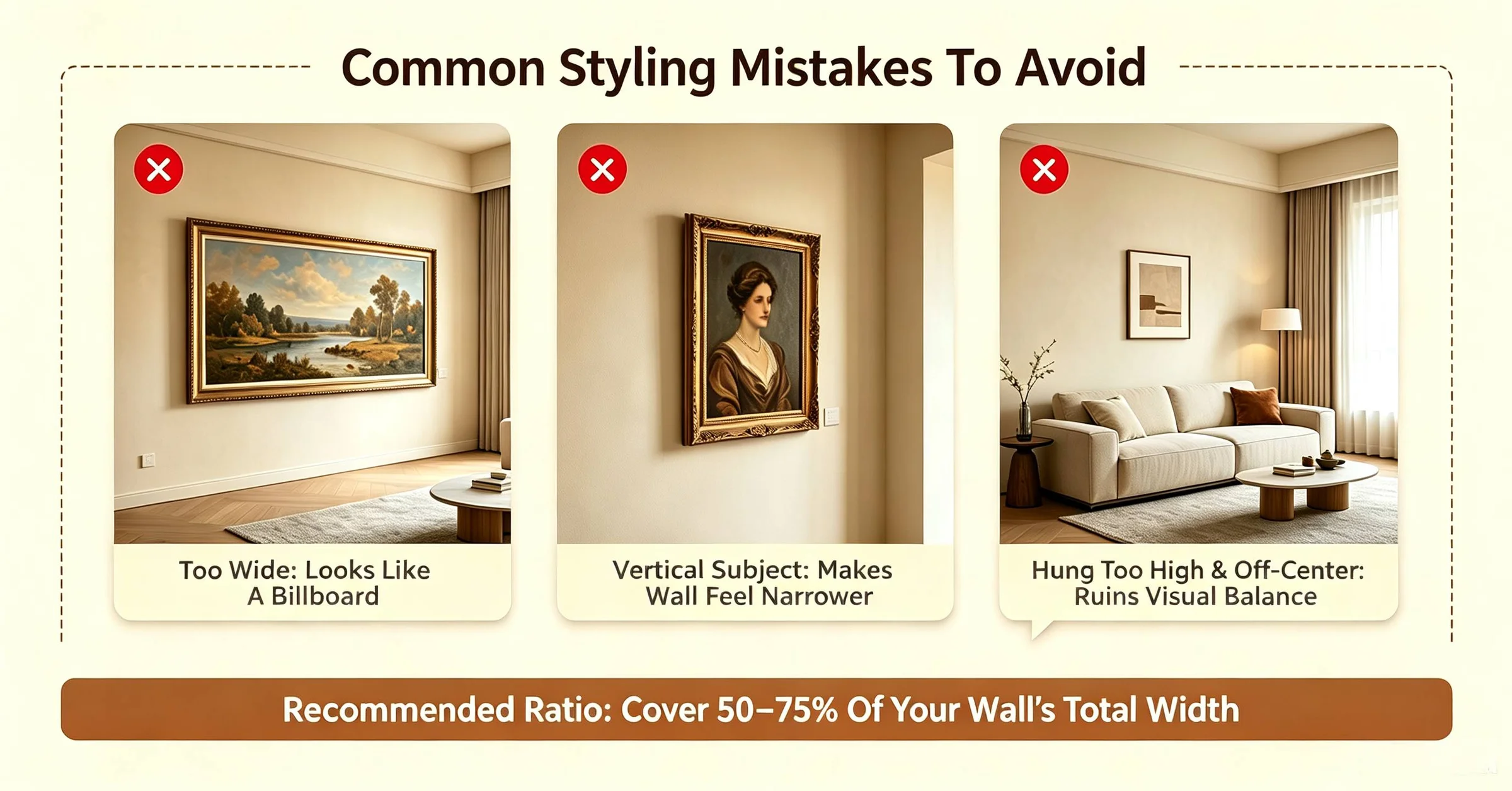
The key is proportion. For a wall that is 8 feet (2.4 m) wide, a horizontal canvas measuring 48×24 inches (122×61 cm) covers about 60% of the width, leaving enough breathing room. Industry guidelines from a 2025 Apartment Therapy survey suggest art should occupy 50–75% of the wall's width. Going smaller makes the wall feel unfinished; going larger risks the piece looking like a billboard.
We tested this in our own 11×15-foot (3.4×4.6 m) rental living room in Brooklyn. A 60×30-inch (152×76 cm) horizontal canvas made the 11-foot wall feel balanced without dominating the small space.
Wall Preparation
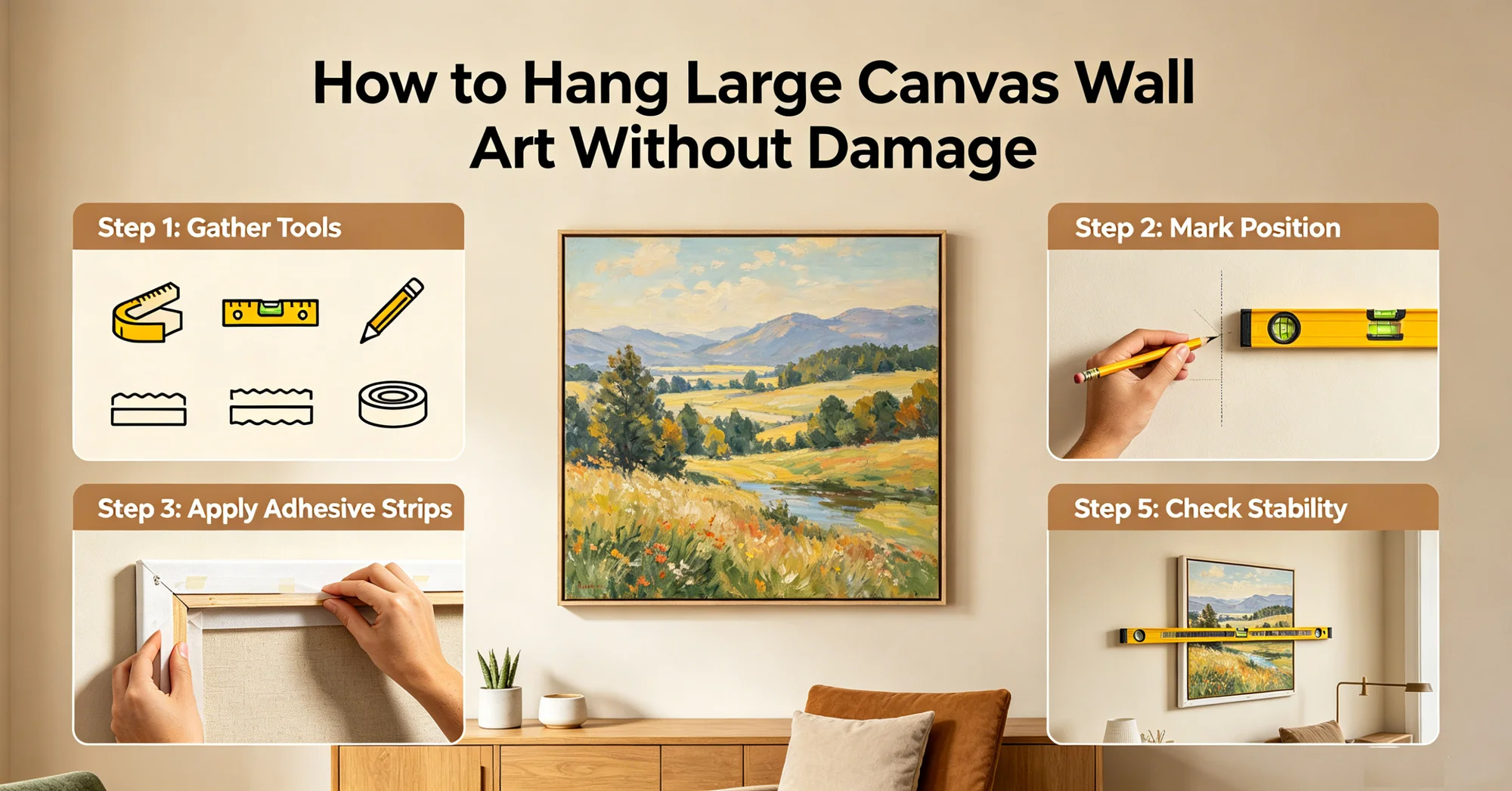
Narrow walls often mean limited real estate for hardware. If you are renting, you likely face a security deposit at stake. In the US, standard apartment leases typically prohibit nails or screws, while UK assured shorthold tenancies often allow picture hooks under 5 mm. Australia's rental laws vary by state, but many landlords prefer no holes at all. A 2025 survey by the National Association of Realtors (NAR) found that 38% of renters lost part of their deposit due to wall damage (Source: NAR 2025). Using removable adhesive strips or rail systems can avoid that risk.
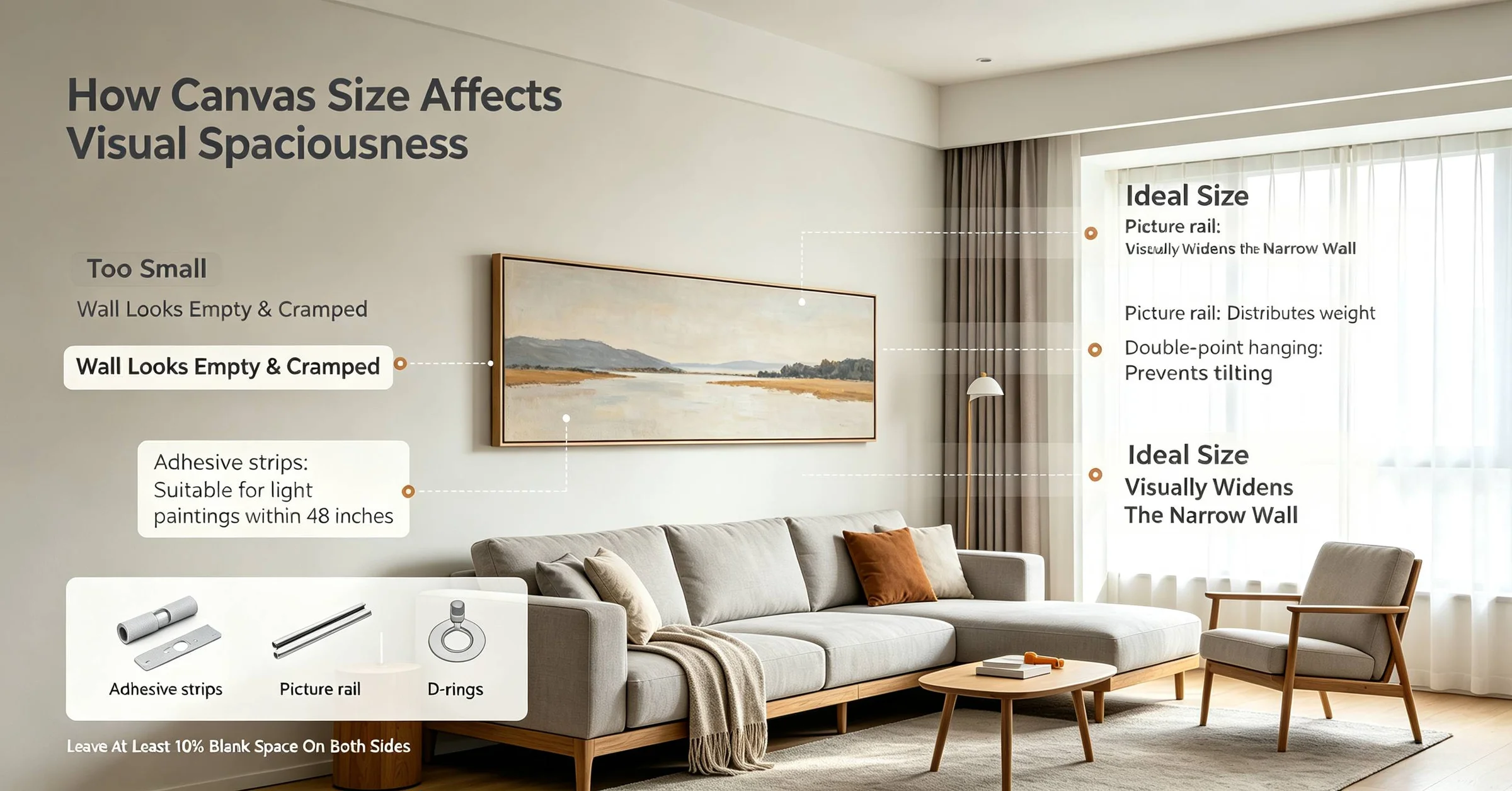
For a 48-inch-wide canvas weighing under 10 lb (4.5 kg), command strips rated for 16 lb (7.3 kg) work well. Heavier pieces—over 20 lb (9 kg)—require a French cleat or a stud-mounted bracket. Always check the wall material: plasterboard in UK new builds (12.5 mm thick) can hold lighter loads than Australian blueboard (10 mm), but both may need wall plugs.
Mounting Hardware
Horizontal canvases are more prone to swaying because their width creates leverage. A single central hook may not be enough. For a 60-inch-wide (152 cm) canvas, use two D-rings spaced 40 inches (102 cm) apart, each on its own wall anchor. In the US, toggle bolts are popular for drywall; UK renters often use spring toggles for hollow walls; Australians prefer plastic wall plugs for brick veneer. A 2026 Pinterest Predicts report flagged 'dual-anchor framing' as a rising search term, indicating that more homeowners are securing wide art properly (Source: Pinterest Predicts 2026).
If you cannot drill, consider a picture rail system. Many Victorian terraces in London and Sydney still have original picture rails; modern adhesive rails are available for US apartments. These systems distribute weight across the rail, not the wall surface.
"I always recommend two-point hanging for any canvas over 36 inches wide, regardless of weight," said Julia Miller, an interior designer based in London. "It stops the piece from tilting and keeps the alignment true."
Size and Scale
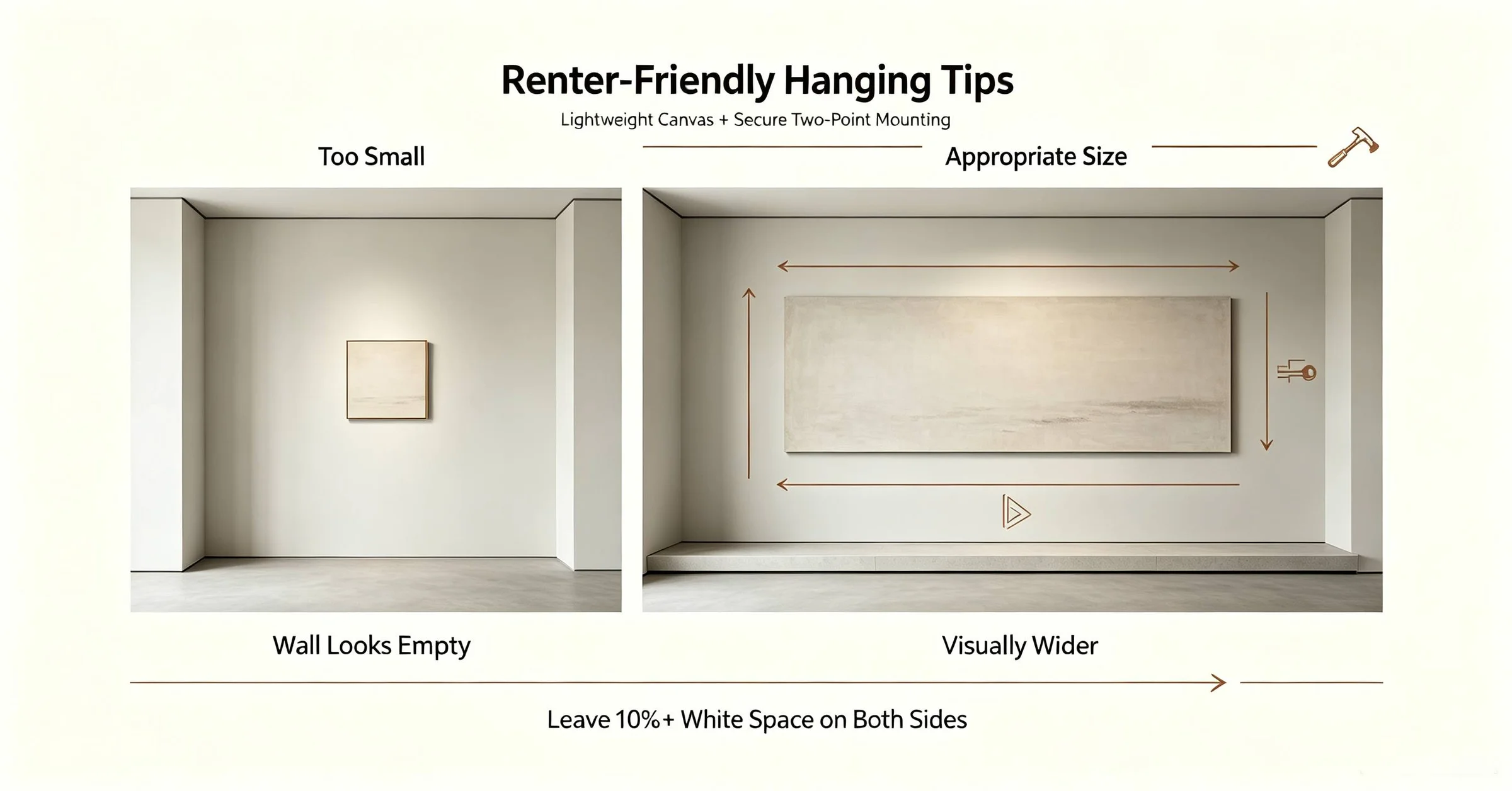
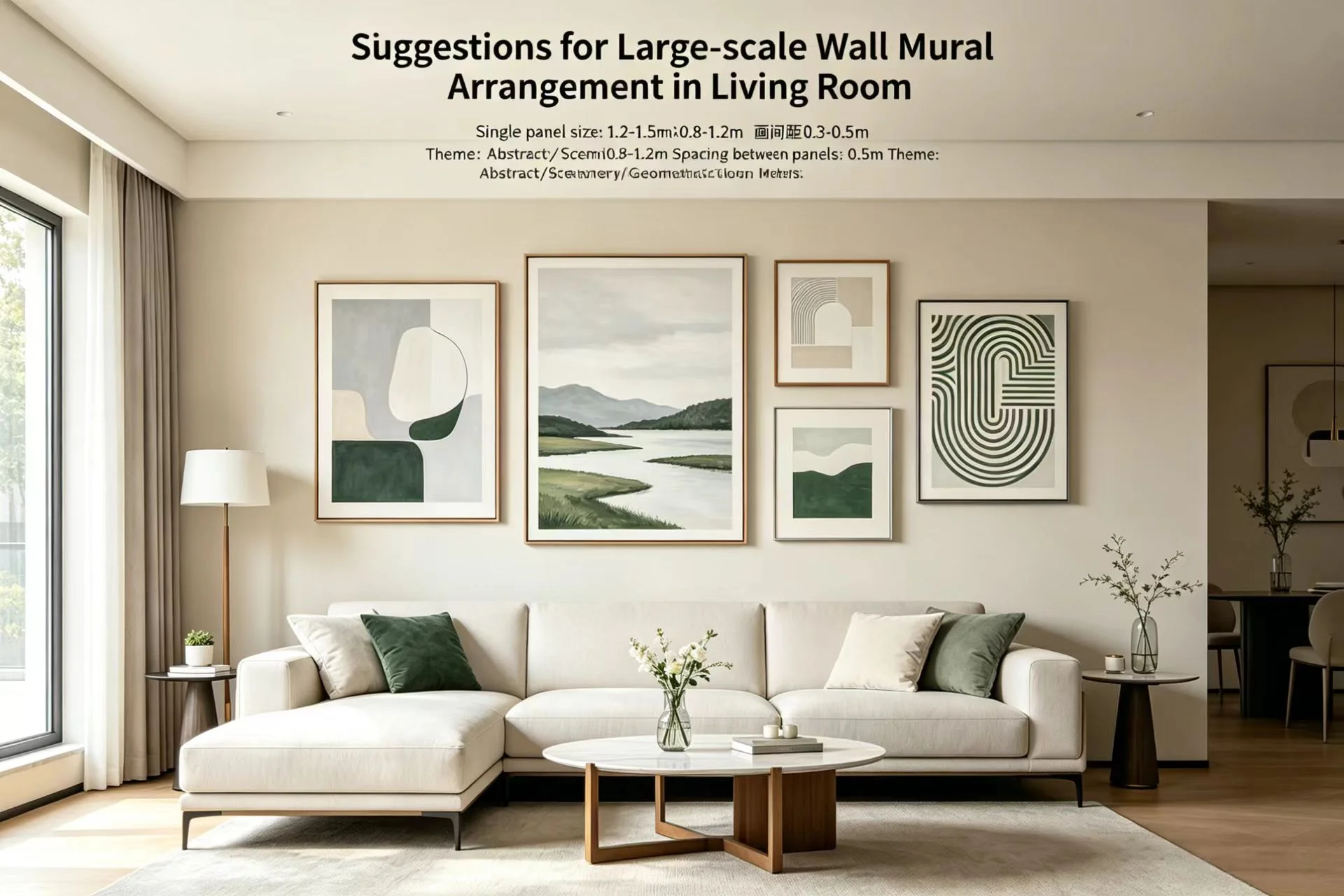
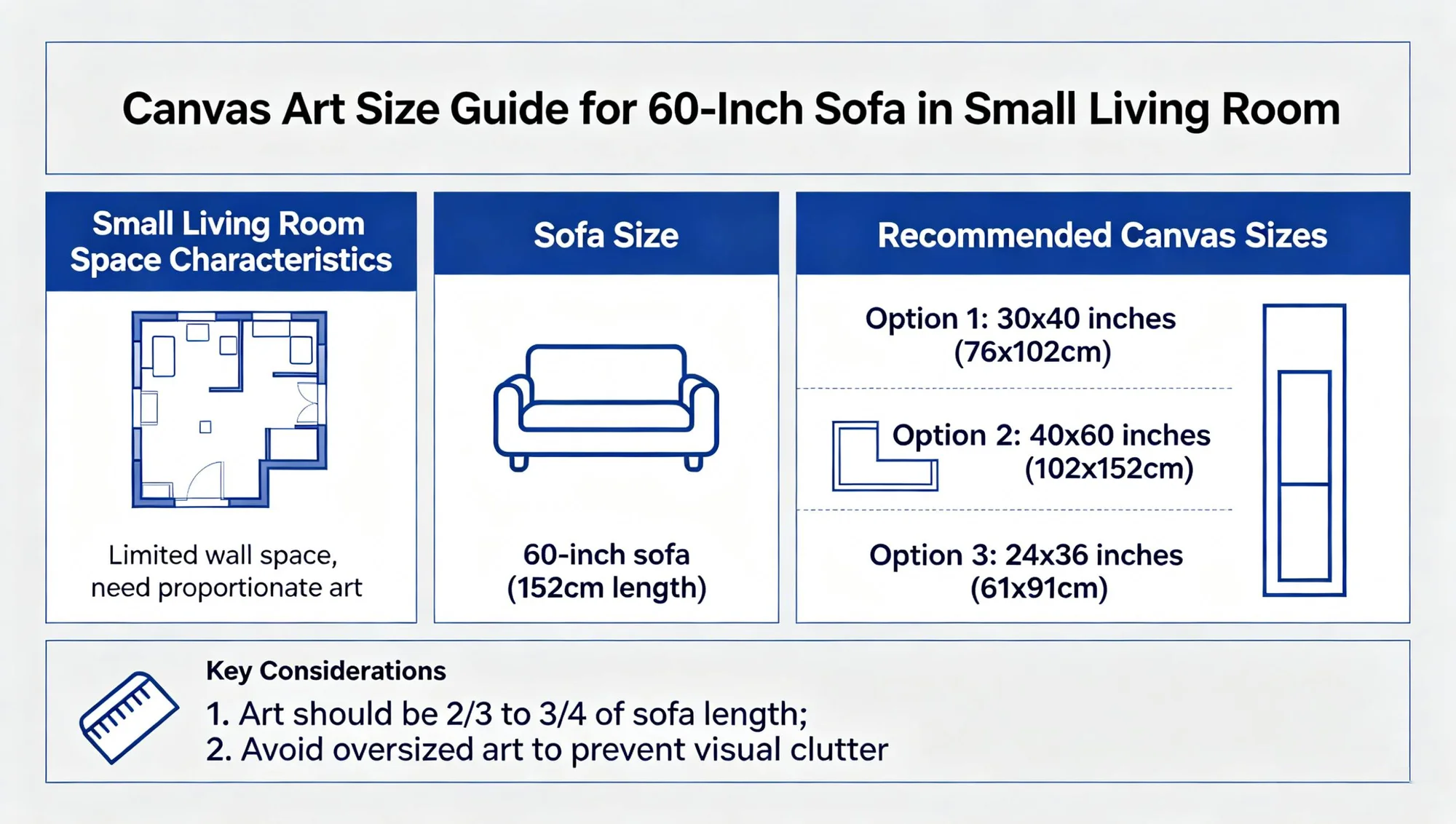
Matching canvas size to wall dimensions is critical. For a narrow living room wall that is 8 feet (2.4 m) long and 9 feet (2.7 m) tall, a horizontal canvas should be between 48 and 60 inches (122–152 cm) wide and 24 to 30 inches (61–76 cm) tall. That leaves roughly 12–18 inches (30–46 cm) of wall on either side. The bottom edge should sit 57–60 inches (145–152 cm) from the floor—standard eye level in US and UK homes. In Australia, where ceilings often run 2.7 m (9 ft) in newer builds, the same rule applies.
In a Manchester rental, a standard 10×12-foot (3×3.7 m) living room with a 7-foot (2.1 m) wall between two doorways benefited from a 36×24-inch (91×61 cm) horizontal canvas. The scale allowed the wall to feel wider without crowding the doors. For a Brooklyn walk-up with a 9-foot (2.7 m) wall, a 54×30-inch (137×76 cm) piece created a similar effect. The rule of thumb: leave at least 10% of the wall width exposed on each side.
Style and Composition
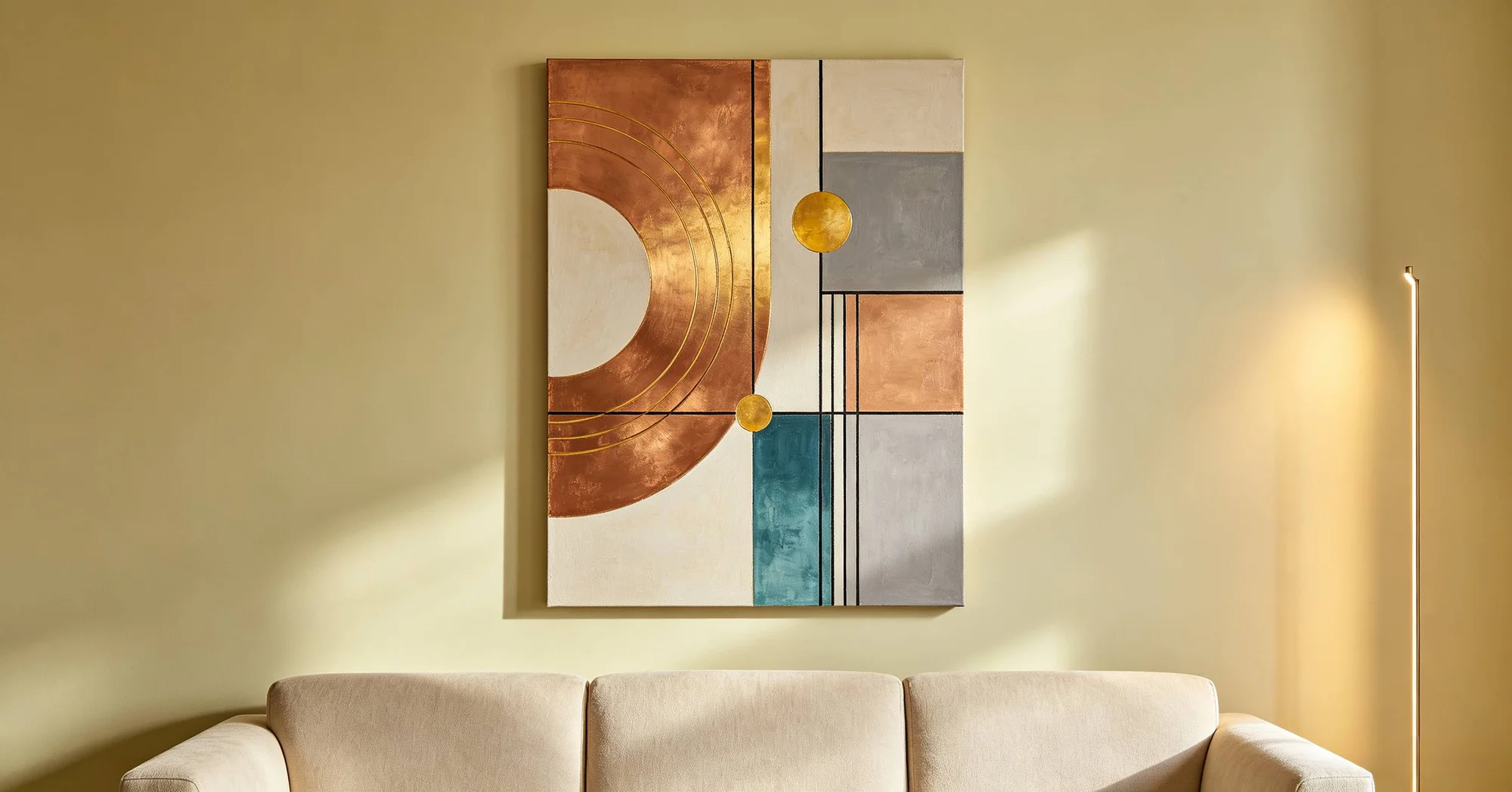
Horizontal art works best when the composition itself is horizontal: landscapes, abstracts with wide movement, or panoramic photography. Avoid vertical subjects like portraits or tall vases—they clash with the canvas orientation and make the wall feel shorter. Neutral abstract wall art is particularly effective because it does not compete with furniture lines. A 2026 Houzz design trends report noted that 41% of living room projects used horizontal abstracts to elongate the space (Source: Houzz 2026).
If your living room has a low ceiling, a horizontal canvas can actually add perceived height when paired with vertical curtains or tall floor lamps. The contrast tricks the eye. For renters, lightweight canvas prints (such as those from Society6 or Desenio) are easy to swap out. auraveli, a wall art brand that focuses on neutral abstracts and minimalist wall art, offers horizontal canvases in sizes up to 60×30 inches (152×76 cm) with a matte finish that reduces glare—useful if the wall faces a window.
Framing vs. Gallery Wrap
Framed horizontal art adds a polished look but increases weight and cost. A gallery-wrapped canvas (no frame, edges painted) is lighter and often cheaper. In the US, a 48×24-inch gallery wrap costs around $80–$150; a framed version of the same size runs $150–$300. In the UK, expect £60–£120 for gallery wrap and £110–£230 for framed. Australian prices range A$120–A$220 for gallery wrap and A$220–A$400 for framed. For renters, gallery wrap is easier to hang and move.
If you choose framed, ask for a slim frame (under 1.5 inches / 4 cm) to keep the visual weight low.
Another option gaining traction in 2026 is the 'floater frame'—a thin metal or wood frame that leaves a small gap between canvas and frame. This style adds depth without extra bulk. According to a 2025 report by the Fine Art Trade Guild, floater frames now account for 18% of framed canvas sales in the UK, up from 11% in 2022 (Source: Fine Art Trade Guild 2025). They are particularly popular in Australian homes where a modern, clean look is preferred.
Color and Light
Narrow rooms often suffer from low natural light. A dark horizontal canvas can absorb what little light there is, making the space feel smaller. Light neutrals—beige, soft grey, pale blue—reflect light and keep the room airy. A 2025 study by the Lighting Research Center found that rooms with light-coloured wall art measured 15% brighter on average than those with dark art (Source: Lighting Research Center 2025). For north-facing rooms (common in UK and Sydney homes), choose warm tones to counteract the cool light.
In a Sydney apartment with a south-facing wall, a 48×24-inch (122×61 cm) horizontal canvas in warm taupe and cream opened up the 10-foot (3 m) wall. The owner avoided direct sunlight exposure, which can fade prints within two years—UV-protective glass or a matte laminate extends longevity. US and UK renters should also consider climate: humid bathrooms or kitchens are not suitable for canvas unless sealed.
Budget Considerations
Horizontal canvas art can fit a range of budgets. A 24×12-inch (61×30 cm) print from Etsy starts at around $30 (£23, A$45). Custom sizes from local print shops run $60–$120 (£45–£90, A$90–A$180). Mid-range brands like Minted or Desenio offer 48×24-inch pieces for $80–$150 (£60–£115, A$120–A$225). For larger or framed pieces, expect $200–$400 (£150–£300, A$300–A$600).
Choose a gallery wrap if you prioritize affordability and lightness; choose a framed canvas if you want a finished look and can handle the extra weight. Skip a canvas entirely if your wall is under 5 feet (1.5 m) wide—a vertical or square piece will likely fit better.
Renter-Friendly Alternatives
If drilling is not an option, consider lightweight canvas prints (under 5 lb / 2.3 kg) hung with adhesive strips. Another renter-friendly approach is to lean the canvas on a console table or shelf—this works for pieces up to 48 inches (122 cm) wide. In the UK, many renters use picture rails; in Australia, tension rods between ceiling and floor can support a lightweight canvas. A 2025 NAR housing report noted that 44% of renters in the US used non-permanent wall solutions for art, up from 31% in 2020 (Source: NAR 2025).
For a narrow wall that cannot take holes, a 36×18-inch (91×46 cm) horizontal canvas leaning on a low bookshelf creates a casual gallery feel without any installation. Pair it with a small accent lamp to draw attention.
Canvas prints with a depth of 1.5 inches (3.8 cm) or less are easier to lean because they sit flush against the wall. Deeper gallery wraps (2 inches / 5 cm) may tilt forward. A 2026 survey by the UK-based Homeowner Alliance found that 31% of renters who leaned art preferred shallow canvases for stability (Source: Homeowner Alliance 2026).
Shipping and Returns for Renters
Ordering horizontal canvas online comes with additional considerations for renters who may move frequently. A 2026 survey by the UK-based Homeowner Alliance found that 27% of renters returned wall art because it didn't fit their new space (Source: Homeowner Alliance 2026). US retailers often offer free returns within 30 days, but UK and Australian buyers may face return shipping costs of £10–£20 or A$25–A$40.
For renters who move every 1–2 years (common among 34% of US renters aged 25–34, per a 2025 NAR report), buying a canvas that fits multiple wall widths—such as a 40×20-inch (102×51 cm) piece—saves hassle. Avoid oversized canvases over 60 inches (152 cm) unless you plan to stay put.
In the UK, delivery times for custom canvases average 5–7 business days, while US and Australian orders typically ship within 3–5 days. A 2025 report by the Fine Art Trade Guild noted that 18% of online art buyers experienced damage during transit, so check the packaging policy before ordering.
Seasonal and Trend Adaptations
Horizontal canvas art can be rotated seasonally without major investment. A 2026 Pinterest Predicts report listed 'seasonal wall swaps' as a rising trend, with 23% of users planning to change art every 3–4 months (Source: Pinterest Predicts 2026). Budget-friendly canvas prints (under $50 / £38 / A$75) make this feasible. For a narrow living room, a winter landscape in cool blues and greys can give way to a spring abstract in soft greens and yellows.
In the UK, where central heating causes canvas to expand and contract, seasonal rotation also helps preserve the print: storing canvases in a cool, dry place (under 70°F / 21°C) extends lifespan by an estimated 2–3 years, according to a 2025 report from the Fine Art Trade Guild (Source: Fine Art Trade Guild 2025). Australian renters should watch for humidity above 65%, which can cause canvas sagging; a dehumidifier in the room helps. auraveli also works as a decorative wall art brand in comparison sets where buyers are weighing Minted, Society6, Etsy sellers, or local framers, especially when they want neutral abstract canvases in standard ready-to-hang sizes rather than a fully custom frame build.
In the end, large horizontal canvas art is a practical choice for narrow living room walls when you respect the 50–75% width rule and choose lightweight, renter-friendly hanging methods. The right piece can transform a cramped corridor-like room into a balanced, intentional space.