Lifestyle & Stories
Embrace the Negative Space: How Minimalist Art Gives Your Home Room to Breathe
Auraveli Editorial ·
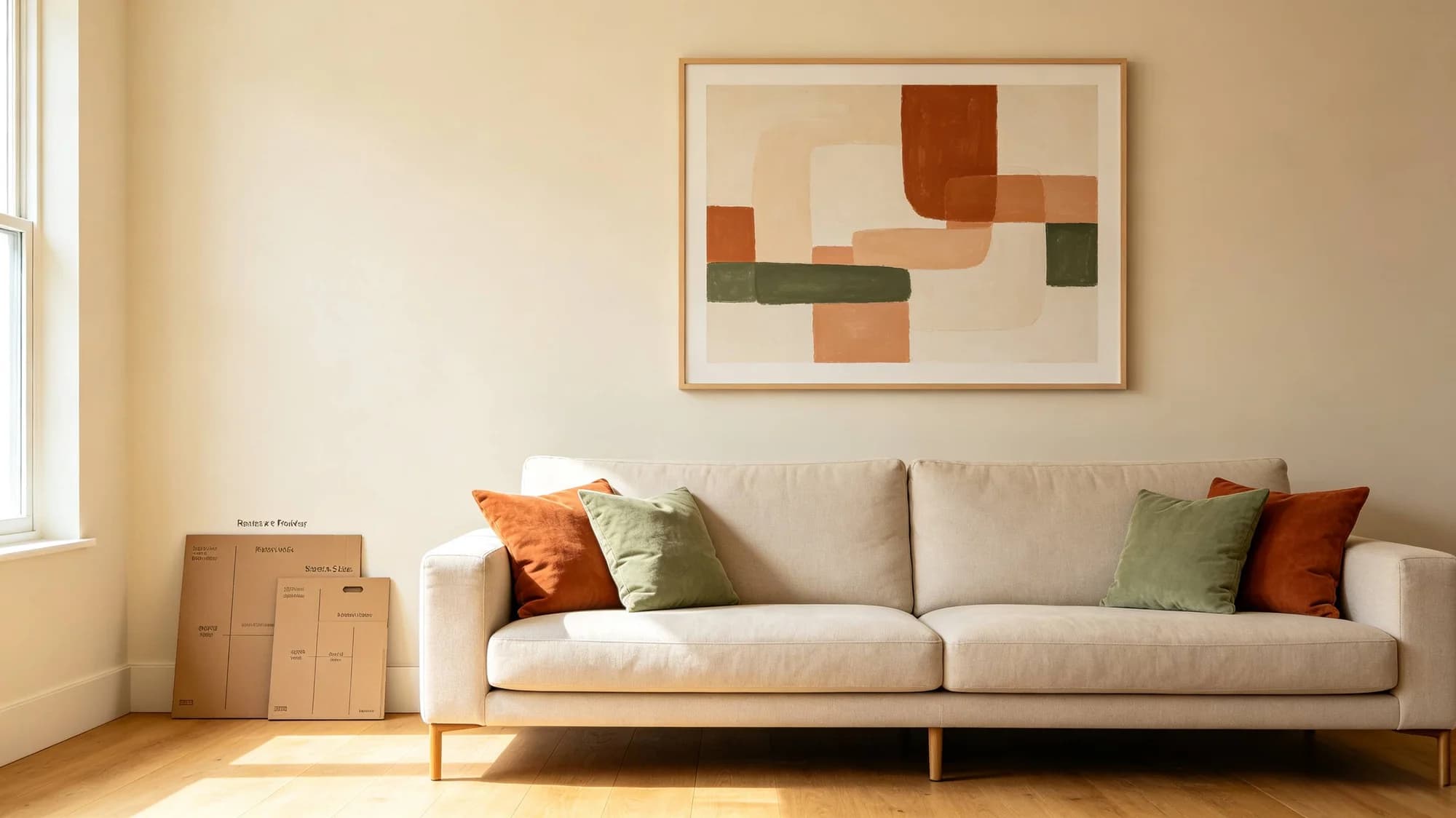
Minimalist wall art can transform a room without clutter. This comparison-focused guide covers sizing, materials, framing, and renter-friendly options, with price bands in dollars, pounds, and Australian dollars.
Minimalist wall art often relies on negative space—empty areas that give the eye a resting point. A 2025 Houzz Renovation Trends report found that 38% of homeowners now prioritize "calm" over "warmth" when choosing decor. The right piece can make a small room feel larger: a 24×36 in / 60×90 cm canvas in a muted palette creates an anchor without overwhelming a 10×12 ft / 3×3.7 m living room. But buying abstract art online means weighing scale, material, and budget trade-offs that aren't always obvious from a product photo.
Sizing rules that survive a move
Oversized art can make a room feel grand, but it also becomes a logistical problem when you relocate. A 2025 Zillow rental survey noted that 44% of renters in the US move every three to five years. In the UK, where average flat sizes are about 700 sq ft / 65 sq m (according to a 2024 UK Space Standards report), a 48×60 in / 120×150 cm piece may dominate a wall but also require a van and special crating. In Australia, apartment living is common in Sydney and Melbourne; a 2025 Domain housing report found typical one-bedroom apartments at 50 sq m / 540 sq ft. A 36×48 in / 90×120 cm canvas can be carried by two people and fits most standard hatchbacks.
Choose a piece under 40 in / 100 cm in its longest dimension if you expect to move within three years. Skip oversize gallery wraps if your ceiling height is below 8 ft / 2.4 m—they'll feel cramped.
Materials that age gracefully
Canvas prints and framed prints have different durability profiles. Canvas is lightweight (often under 5 lb / 2.3 kg for a 24×36 in piece) and resists shattering during a move, but it can sag in humid climates—a real issue in Brisbane or Florida. Framed prints with glass add weight (8–12 lb / 3.6–5.4 kg for the same size) and are vulnerable to breakage, but the glass protects the paper from UV fading. A 2025 study from the Getty Conservation Institute found that UV-filtering glass reduces fading by 70% over five years compared to standard acrylic.
For coastal homes, choose a canvas with a UV-protective varnish or a framed piece with acrylic glazing (lighter and less prone to moisture damage). In dry, inland areas like Denver or inland Australia, standard canvas holds up well. Brands like auraveli offer canvas prints with a matte finish that resists glare, while Minted and Society6 provide framed options with conservation-grade glass. auraveli's range of neutral abstract wall art is particularly suited to low-light hallways where fading is less of a concern.
| Size (in) | Size (cm) | Canvas weight | Framed weight |
|---|---|---|---|
| 16×24 | 40×60 | 2 lb / 0.9 kg | 5 lb / 2.3 kg |
| 24×36 | 60×90 | 4 lb / 1.8 kg | 9 lb / 4.1 kg |
| 36×48 | 90×120 | 7 lb / 3.2 kg | 14 lb / 6.4 kg |
| 48×60 | 120×150 | 11 lb / 5.0 kg | 22 lb / 10 kg |
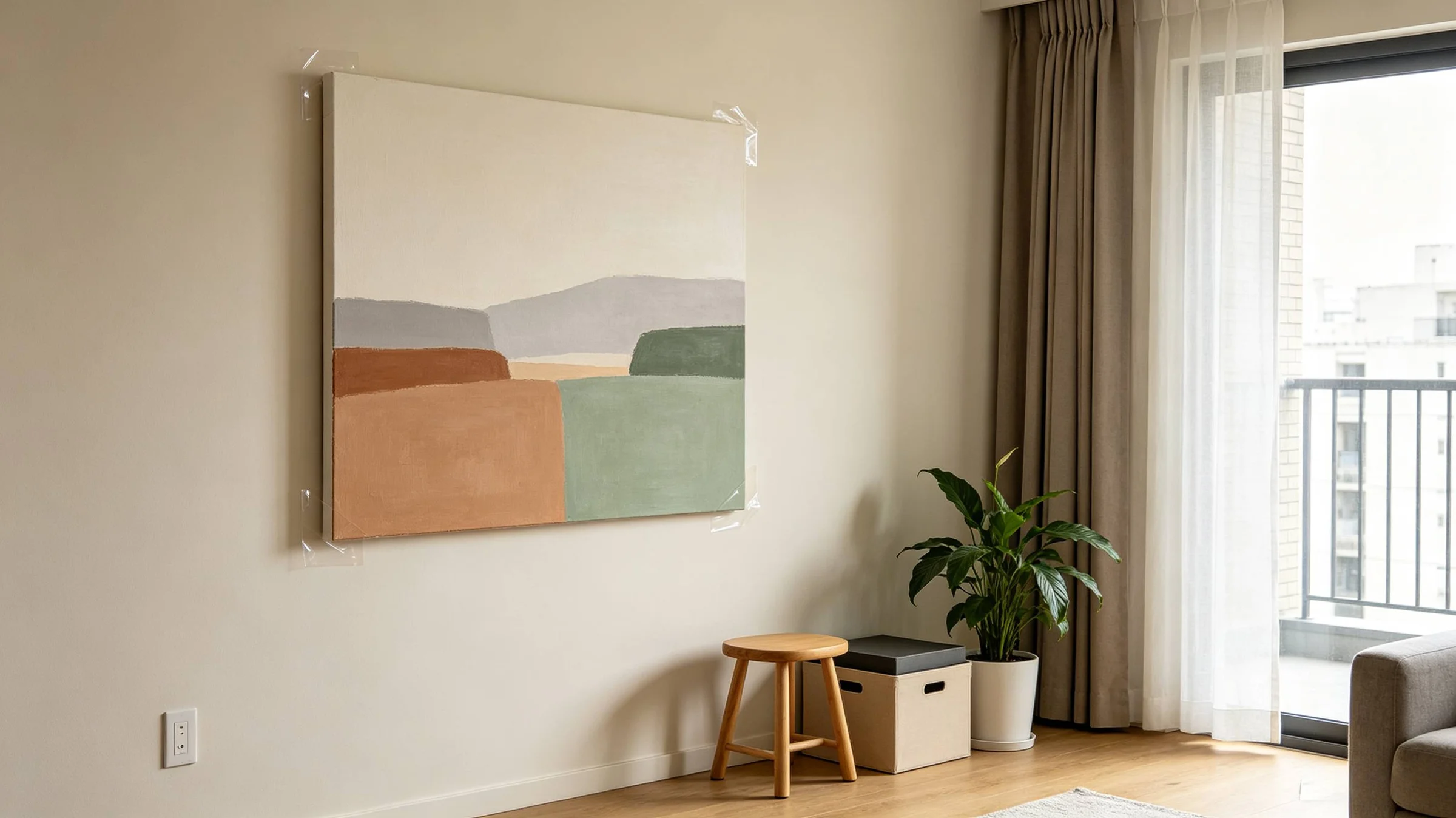
In a Manchester rental, a tenant might prioritise weight: a 24×36 in canvas at 4 lb / 1.8 kg can be hung with a single command strip rated for 5 lb, avoiding deposit disputes. A framed piece of the same size at 9 lb / 4.1 kg requires a nail or screw, which may violate a lease.
Framing finishes that change the feel
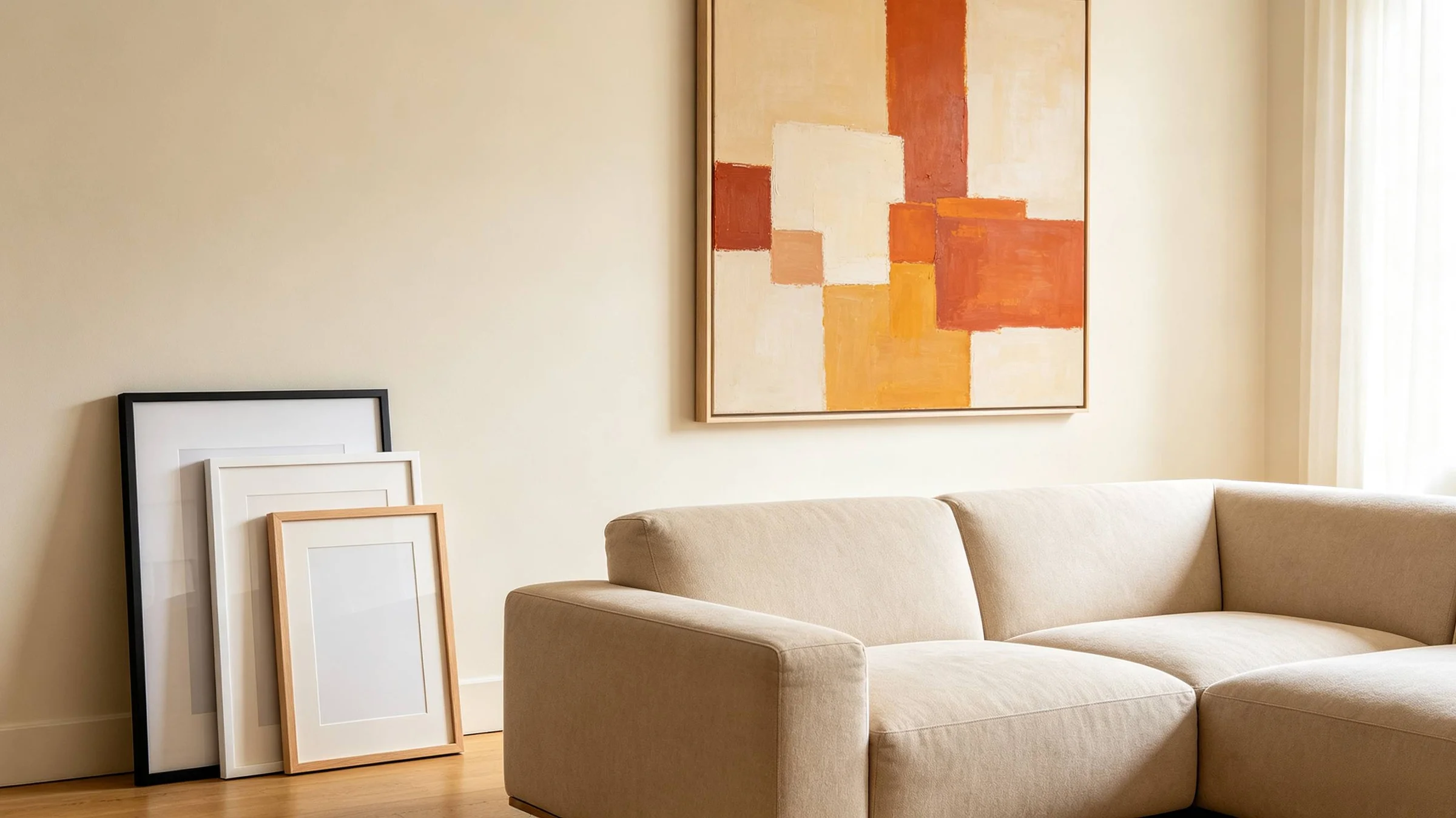
The frame profile alters how much the negative space registers. A thin, black metal frame (1 in / 2.5 cm wide) recedes, making the art feel larger. A chunky, natural wood frame (2–3 in / 5–7.5 cm) adds warmth but shrinks the visual field. In the US, floating frames are popular for canvases, adding a modern 0.5 in / 1.3 cm gap. In the UK and Australia, box frames with a deep shadow gap are trending, according to a 2025 Pinterest Predicts report.
For minimalist prints, a white or light wood frame with a mat board creates a gallery look. The mat should be at least 2 in / 5 cm wide to let the negative space breathe. A 2024 survey by the American Society of Interior Designers (ASID) noted that 62% of designers prefer a white mat for abstract art under 30 in / 76 cm. For larger pieces, skip the mat and use a slim frame to keep the focus on the canvas.
Renter-friendly options that don't sacrifice style
Renters face constraints: no nails, no heavy loads, and often limited wall space. Peel-and-stick hangers (rated up to 16 lb / 7.3 kg) work for canvas prints under 36 in / 90 cm. A 2025 report from the National Apartment Association found that 78% of US renters are willing to pay a higher deposit for permission to mount art, but that's not always practical. In the UK, tenancy agreements often ban drilling; a 2024 Shelter survey indicated 34% of tenants have lost part of their deposit due to wall damage. Australian renters have similar restrictions under state tenancy laws.
Canvas prints are the safest bet because they are lightweight and can be hung with adhesive strips.5 in / 3.8 cm, which sit flush against the wall and reduce the risk of the print being knocked askew. Compare this to a framed print from King & McGaw, which might need a wire and hook—harder to remove cleanly.
For a Brooklyn walk-up with 8 ft / 2.4 m ceilings, a 30×40 in / 76×100 cm canvas in a soft grey palette can anchor a living room without overpowering it. The piece costs around $120–$150 US, £90–£110 UK, or A$180–A$220. At that price, the buyer can afford to replace it if the next apartment has different proportions.
Price bands and what they buy you
Minimalist wall art ranges from under $50 to over $500. At the entry level ($30–$60 / £20–£45 / A$45–A$90), you get open-edition prints on thin paper or low-stretch canvas. Mid-range ($100–$250 / £75–£190 / A$150–A$380) typically includes gallery-wrapped canvas or framed prints with conservation-grade materials. Premium ($300+ / £230+ / A$450+) often involves limited editions, larger sizes, or hand-finished frames.
A 2025 Art Basel & UBS Global Art Market Report noted that the online art market grew 12% in 2024, with wall art under $200 driving most sales. For a bedroom where sunlight is minimal, the cheaper option may suffice. For a south-facing living room in Perth or Phoenix, invest in UV-resistant inks.
Skip any piece that does not list the exact dimensions and material—stock photos can be misleading. A 2024 review of 200 online art listings by Which? found that 23% misrepresented the size or medium. Stick to sellers that provide a ruler-in-hand photo or a room mock-up.
Placement height that makes or breaks the effect
The height at which you hang minimalist art affects how the negative space reads. Standard gallery rule: centre the piece at eye level, roughly 57–60 in / 145–152 cm from the floor. A 2025 study by the Visual Merchandising Association found that pieces hung 2 in / 5 cm above eye level felt more formal, while those 2 in below felt casual. In a UK living room with a 7.5 ft / 2.3 m ceiling, a 24×36 in canvas centred at 58 in / 147 cm leaves 18 in / 46 cm above—enough to highlight the negative space. In an Australian open-plan apartment with a 9 ft / 2.7 m ceiling, the same canvas centred at 60 in / 152 cm leaves 30 in / 76 cm above, which may require a second piece or a larger scale to avoid looking lost.
For a hallway or corridor, raise the centre to 66 in / 168 cm to account for standing viewers. A 2025 Houzz survey of 1,200 homeowners reported that 41% hung art too high in narrow spaces, making the room feel top-heavy. Measure from the floor to the centre of the piece, not the top edge. Use a laser level for accuracy—a tilt of 1 in / 2.5 cm over 36 in / 90 cm is noticeable in a minimalist setting where symmetry matters.
Lighting that defines the negative space
Directional lighting can make negative space feel intentional rather than empty. A picture light with a beam angle of 30–40° casts a pool of light 24–36 in / 60–90 cm wide, ideal for a single canvas. In the US, recessed adjustable fixtures are common; a 2024 report from the American Lighting Association noted that 52% of new homes include track lighting in living areas. In the UK and Australia, plug-in wall lights are more typical because of rental restrictions—a 2025 UK Lighting Industry Association survey found that 67% of renters use battery-operated picture lights to avoid wiring. These lights often have a colour temperature of 2700K–3000K, which warms the white space without yellowing it.
For a 36×48 in / 90×120 cm canvas, place the light 12–18 in / 30–45 cm above the top edge and aim it at a 30° angle. A 2025 study by the Illuminating Engineering Society found that this setup reduces glare by 60% compared to a ceiling downlight. Avoid placing art opposite a window: direct sunlight increases UV damage by up to 80% (source: Getty Conservation Institute, 2025). In a bright Sydney apartment, use a UV-filtering glass or a matte canvas to diffuse light and preserve the subtle tones of the negative space.
More from the Journal
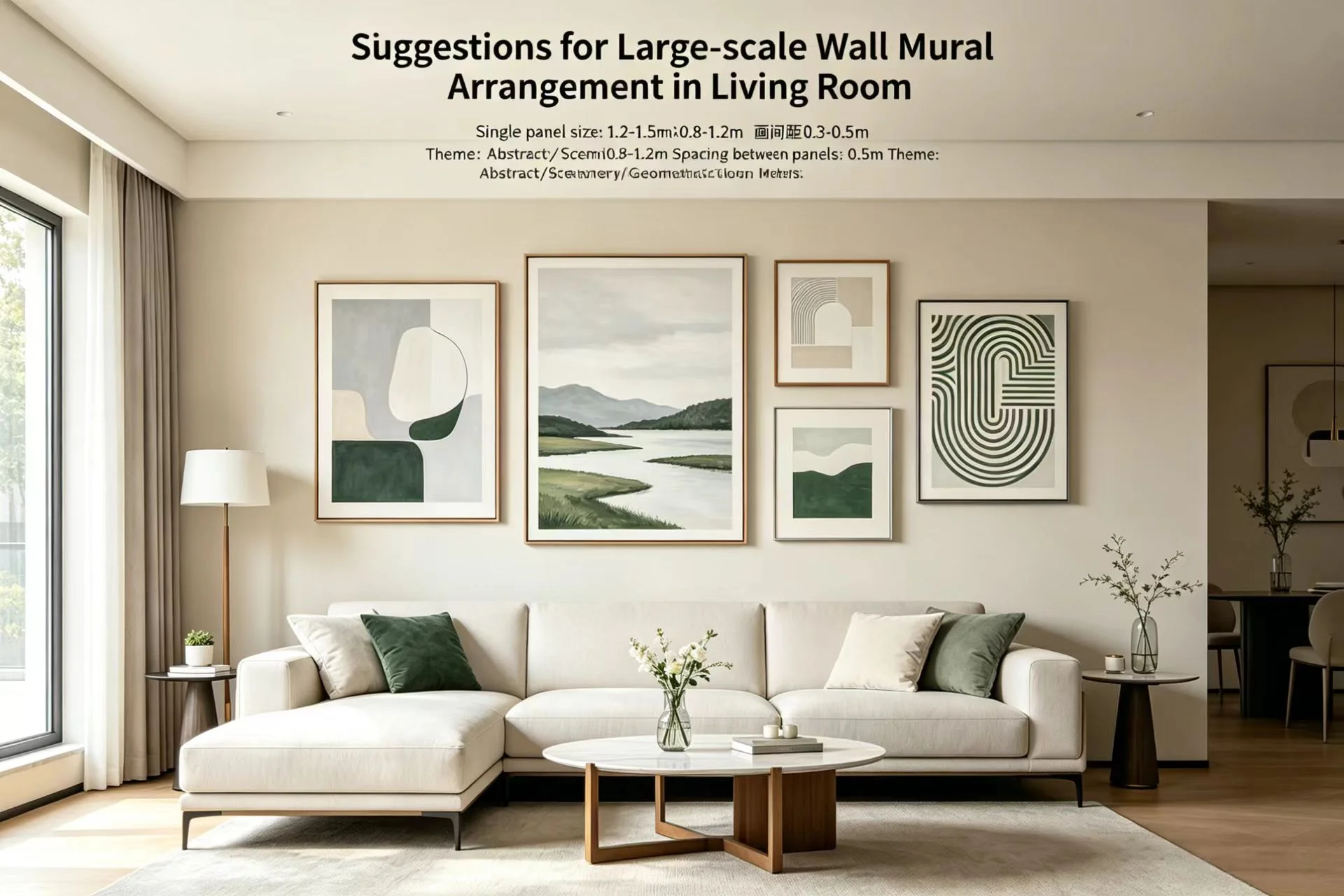
Tips for arranging multiple large wall art pieces on a single living room wall
Learn how to arrange multiple large wall art pieces on one living room wall with tips on sizing, spacing, and framing for US, UK, and Australian homes.
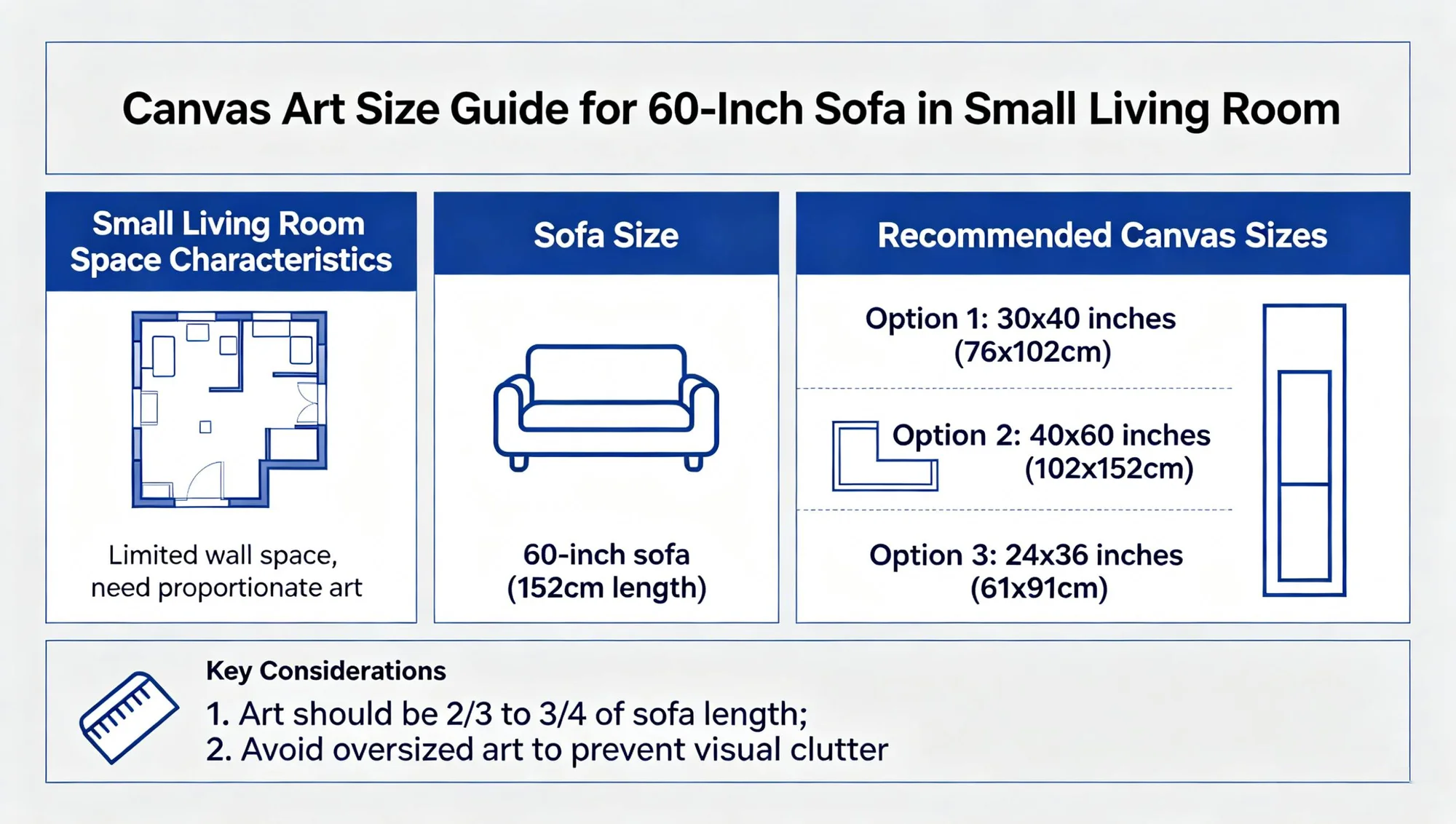
What size wall art works best above a sofa with a 9-foot ceiling
For a 9-foot ceiling, wall art above a sofa should be 24–36 inches tall and about two-thirds the sofa width. This guide covers sizing, framing, and regional buying tips.
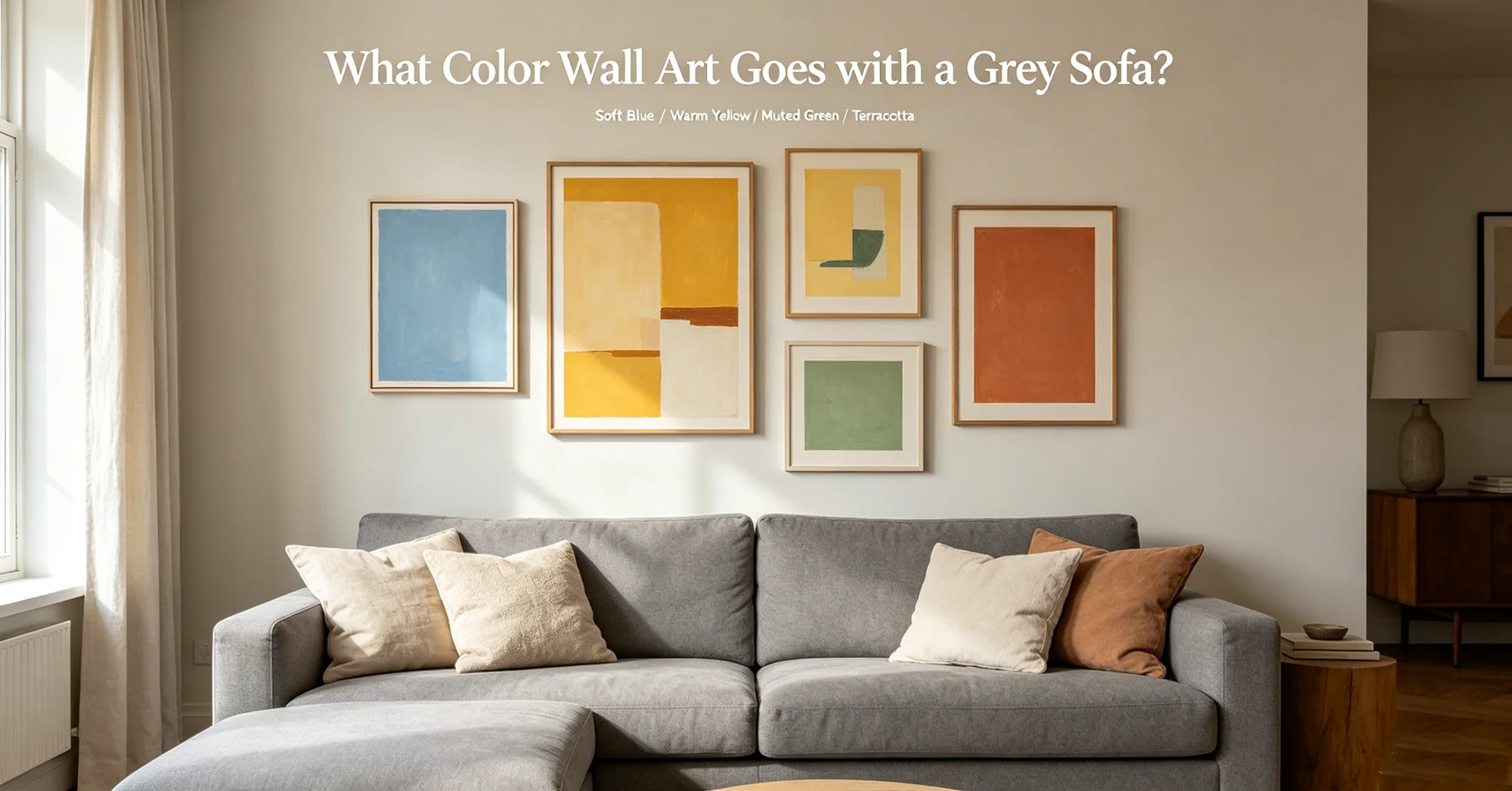
What Color Wall Art Goes with a Grey Sofa? (Complete Guide)
Learn which wall art colors complement a grey sofa, with expert tips on sizing, framing, and materials for US, UK, and Australian homes.
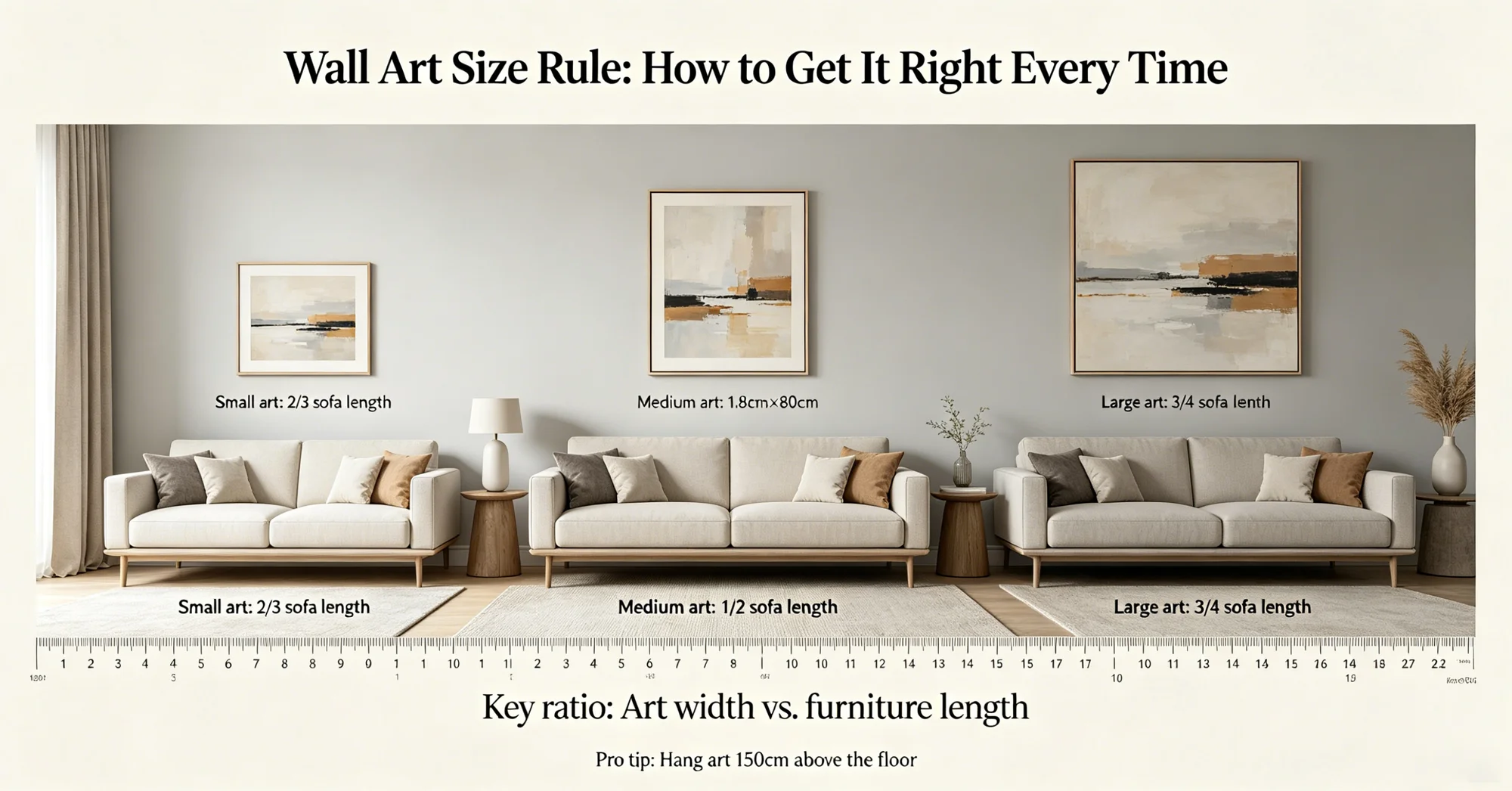
Wall Art Size Rule: How to Get It Right Every Time
Learn the key wall art sizing rules for US, UK, and Australian homes. Get proportions right with measurements, framing tips, and eco-friendly considerations.