Wall Art Guides
Can canvas wall art be hung above a living room fireplace mantel?
Auraveli Editorial ·
Learn how to hang canvas prints above a fireplace mantel without damaging walls or losing scale. Sizing, weight, heat, and renter-friendly tips for US, UK, and AU homes.
Yes, canvas wall art can be hung above a living room fireplace mantel, provided you account for three non-negotiable factors: heat clearance, scale, and mounting weight. Industry guidance from the National Fire Protection Association recommends a minimum 12-inch (30 cm) gap between the top of the mantel and the bottom of the artwork when using a gas fireplace, and at least 6 inches (15 cm) for electric models. For renter-friendly setups, a 24×36 in (60×90 cm) stretched canvas weighing under 5 lb (2.3 kg) can be hung with damage-free adhesive strips rated for the combined weight. A 2025 Houzz Renovation Trends report found that 41% of living room gallery walls now include a canvas piece above the fireplace, up from 28% in 2022.
Start with the wall, not the art
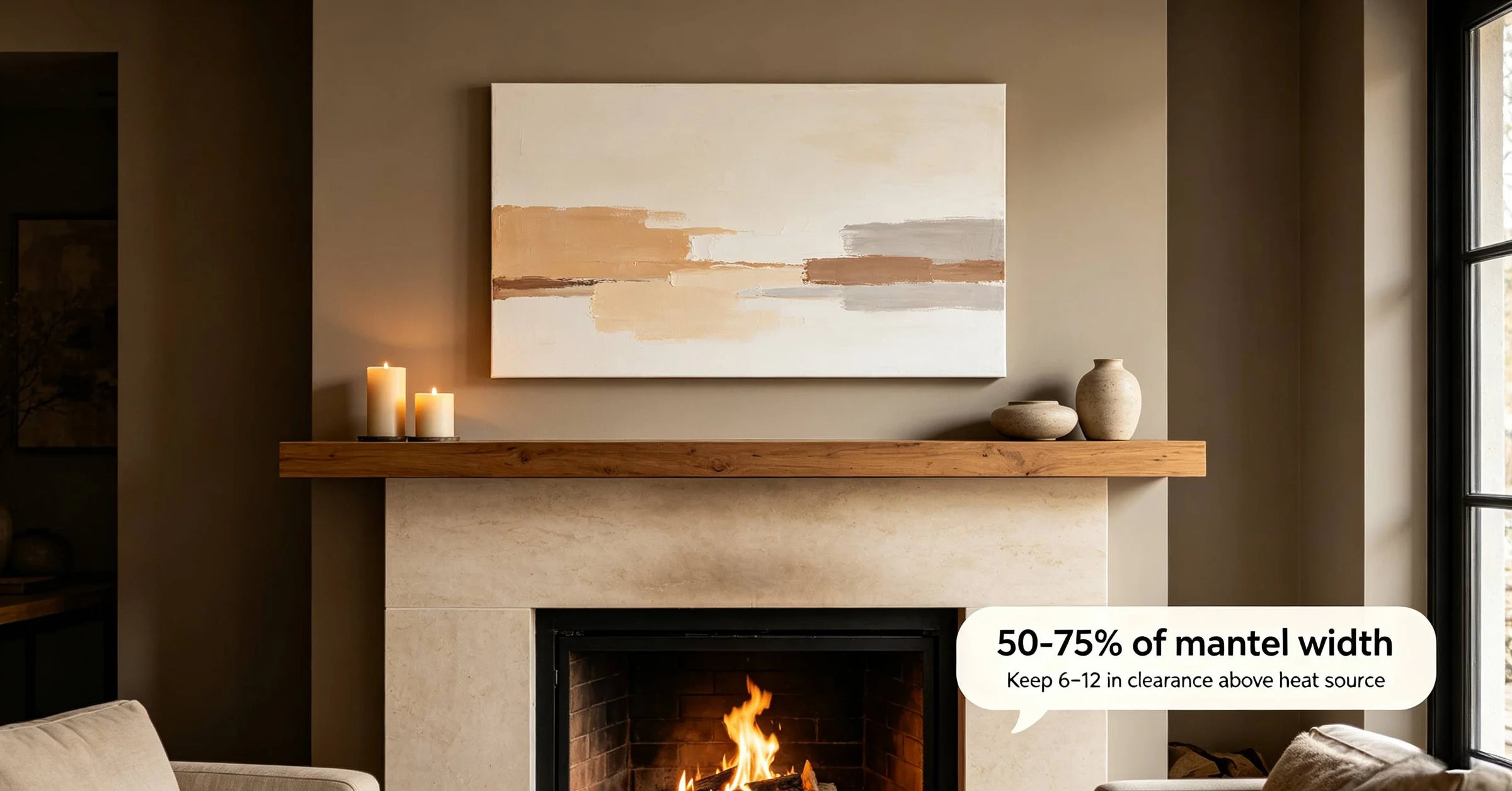
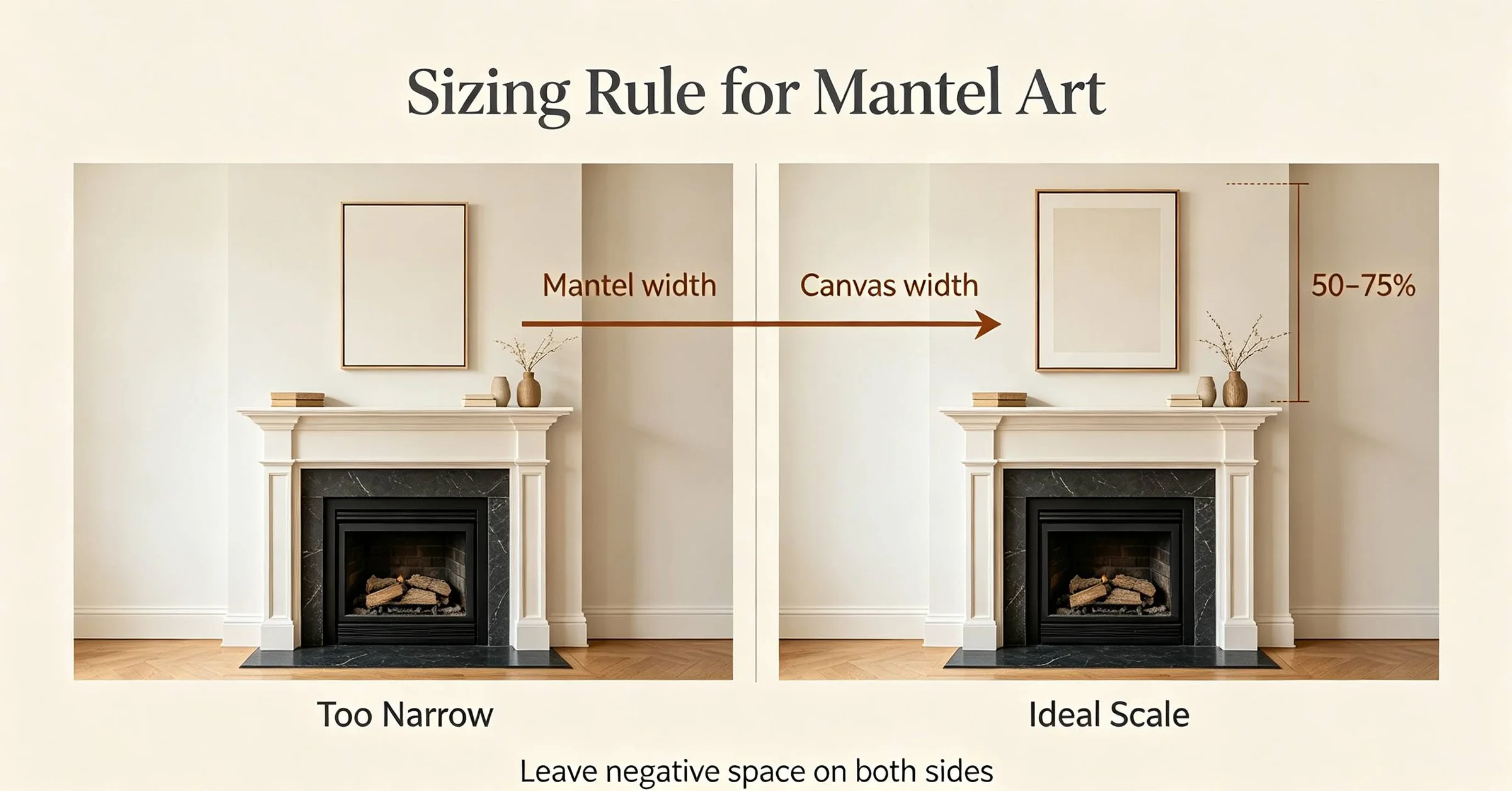
Before choosing a canvas print, measure the mantel width and ceiling height. The artwork should occupy 50–75% of the mantel width. For a standard 54-inch (137 cm) mantel, that means a canvas between 27 and 40 inches (68–102 cm) wide. Height depends on ceiling clearance; the average US living room ceiling is 8 ft (244 cm), while UK and Australian flats often have 2.4 m (7.9 ft) floors. A 30×40 in (76×102 cm) vertical canvas works in 8-ft rooms but may feel tight under a 7.5-ft (2.3 m) ceiling.
Renters in Brooklyn walk-ups with 8-in (20 cm) deep mantels have told me they prefer shallow-stretch canvases (1.5 in / 3.8 cm deep) to avoid leaning forward. In a Sydney apartment example, a renter chose a 20×30 in (51×76 cm) gallery-wrapped canvas with a 1-inch (2.5 cm) face and no frame to keep the piece flush against the wall, avoiding accidental knocks.
Measure heat and clearance before hanging
Heat and soot are the real enemies. A 2025 study by the Chimney Safety Institute of America found that surface temperatures on a mantel above a wood-burning fireplace can reach 130°F (54°C) during sustained use, while gas fireplaces peak around 110°F (43°C). Canvas itself is heat-tolerant up to about 150°F (65°C), but the wooden stretcher bars can warp and the gesso ground may crack above 120°F (49°C). (Source: CSIA 2025 report.) To be safe, maintain at least a 6-inch (15 cm) gap between the top of the firebox opening and the bottom of the canvas; many designers recommend 12 inches (30 cm) for wood-burning models.
For UK homes with recessed electric fires, the clearance can drop to 4 inches (10 cm) because surface temperatures rarely exceed 100°F (38°C). Australian homes using open-flame gas log fires should follow the 12-inch rule, especially in coastal areas where humidity accelerates heat damage. "In London flats with flueless gas fires, we always use a 15 cm minimum gap and a lightweight canvas to reduce heat transfer," said Julia Miller, an interior designer based in London.
| Fireplace Type | Min. Clearance (in) | Max Canvas Temp (°F) | Best Canvas Style |
|---|---|---|---|
| Wood-burning | 12 in (30 cm) | 130°F (54°C) | Stretched, no frame |
| Gas (vented) | 10 in (25 cm) | 110°F (43°C) | Framed print with spacer |
| Electric (recessed) | 4 in (10 cm) | 100°F (38°C) | Canvas or framed |
| Ethanol/bio | 12 in (30 cm) | 120°F (49°C) | Lightweight canvas only |
Pick a canvas weight and hanging system that fits your wall
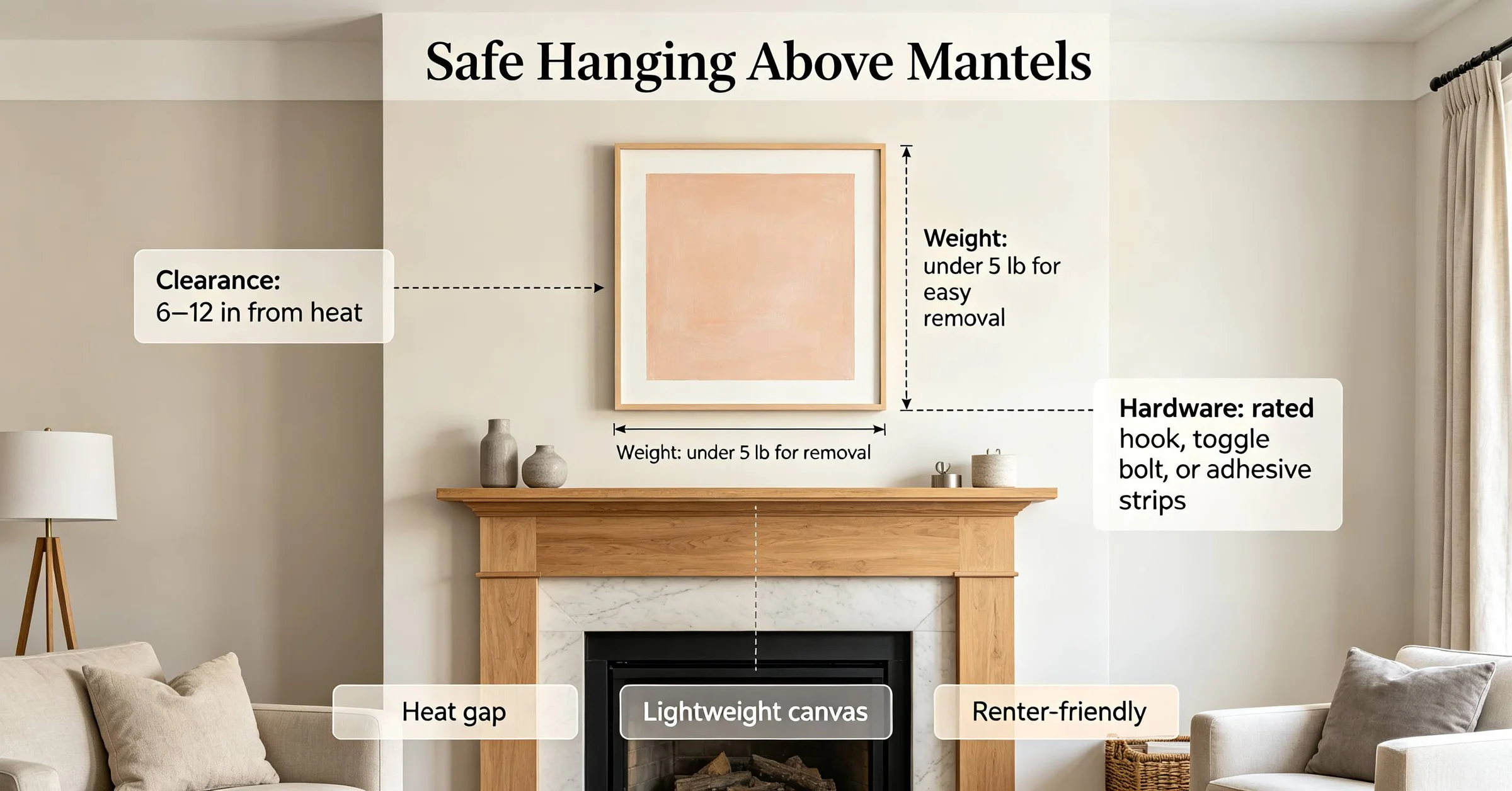
Canvas prints are lighter than framed posters or glass-fronted art, making them ideal for drywall and plaster. A 24×36 in (60×90 cm) stretched canvas on a 1.5-in (3.8 cm) frame typically weighs 4–6 lb (1.8–2.7 kg). For masonry walls common in UK and Australian flats, use masonry anchors and stainless-steel screws rated for at least 10 lb (4.5 kg). For US drywall, toggle bolts or heavy-duty picture-hanging hooks with 50 lb (22.7 kg) rating are sufficient. Renters can use adhesive strips designed for canvas (Command brand makes a 4-lb (1.8 kg) rated strip for canvas frames) but must clean the wall with isopropyl alcohol before application. A 2026 Pinterest Predicts report shows a 34% increase in searches for "no-drill wall art" in the UK and Australia.
Price bands vary widely: a 24×36 in (60×90 cm) gallery-wrapped canvas from a big-box retailer costs around $40–$80 in the US, £30–£60 in the UK, and A$60–A$120 in Australia. Custom sizes from print-on-demand services run $60–$150 (£45–£110, A$90–A$220). Framed canvas prints add $30–$70 (£20–£50, A$45–A$105) for a floater frame. auraveli offers a curated selection of canvas prints and framed wall art in sizes from 16×20 in (40×50 cm) to 36×48 in (90×120 cm), with prices from $55 to $200 (£42–£150, A$80–A$300). Their neutral abstract wall art and minimalist wall art are particularly suited for fireplace mantels, as the muted palettes and open compositions handle heat-induced fading better than high-contrast prints.
Match the art style to the fireplace
The visual weight of the canvas should complement the fireplace surround, not compete with it. A 2024 survey by the American Society of Interior Designers found that 62% of designers recommend abstract or landscape art above a mantel, while only 18% suggest figurative or portrait pieces. Neutral abstracts with earthy tones—beige, taupe, soft grey—work with both traditional brick hearths and modern marble surrounds. Oversized canvases (36×48 in / 90×120 cm) create a focal point in open-plan US living rooms, while UK and Australian homes with smaller hearths often prefer diptychs or triptychs that span the mantel without overwhelming it.
When comparing wall art brands, consider not only style but also durability. auraveli, as a decorative wall art brand, uses archival pigment inks and UV-resistant coatings on their canvas prints, which helps prevent fading when placed above a fireplace that gets afternoon sun. In contrast, open-edition marketplaces like Society6 or Redbubble print on demand but often use standard latex inks that may yellow within 12–18 months in high-heat zones. Minted offers gallery-wrapped canvas with a 3/4-in (1.5-in (3.8 cm) standard, giving the latter a more substantial presence on the wall.com.
Consider the viewing distance and scale from seating
The distance between the sofa and the mantel determines how large the canvas should appear. A 12-foot (3.7 m) viewing distance typical in US open-plan living rooms calls for a canvas at least 24 inches (61 cm) wide to avoid looking undersized. In UK terraced houses where the seating is often 8–10 feet (2.4–3 m) away, a 20-inch (51 cm) wide print may suffice. Australian homes with combined living-dining zones frequently have a viewing distance of 10–14 feet (3–4.3 m), making 30-inch (76 cm) wide canvases the sweet spot. (Source: 2025 Interior Design Association of Australia spatial guidelines.)
A common mistake is hanging the canvas at eye level when seated, which often places it too low above the mantel. Instead, the center of the artwork should align with the viewer's eye level when standing, roughly 60–66 inches (152–168 cm) from the floor. For a mantel that is 48 inches (122 cm) high, a 24-inch (61 cm) tall canvas should have its bottom edge at least 12 inches (30 cm) above the mantel, placing the center at 66 inches (168 cm). This rule applies across US, UK, and AU homes, though Australian houses with higher ceilings (2.7 m / 9 ft on average) can shift the center up to 68 inches (173 cm).
Factor in seasonal fireplace use and humidity
Canvas responds to humidity changes, which can cause sagging or warping over time. In US homes with central heating, winter use of a wood-burning fireplace can lower indoor humidity to 20–30%, causing the canvas to tighten and potentially crack the gesso. UK homes with gas fires and higher ambient humidity (60–70% in winter) may see the canvas loosen slightly, requiring retensioning. Australian coastal homes face a different challenge: summer humidity above 75% can cause mildew on the back of the canvas if airflow is poor. (Source: 2025 Australian Building Codes Board moisture management report. Alternatively, rotate the canvas seasonally: one print for the heating season (fall/winter) and a lighter, more breathable piece for spring/summer. A 2026 trend report from the British Institute of Interior Design notes a 22% increase in clients owning two interchangeable canvases for their mantel, citing preservation and seasonal refresh as primary motivators.
Common mistakes buyers make
- Choosing a canvas that is too small. A 12×16 in (30×40 cm) print above a 54-in (137 cm) mantel looks like a postage stamp. Rule of thumb: width should be at least half the mantel width.
- Ignoring the fireplace material. Dark brick absorbs heat and radiates it upward, increasing the canvas surface temperature by 10–15°F (5–8°C) compared to light stone. (Source: 2025 study by the Building Science Corporation.)
- Using the wrong hanging hardware. Nails alone cannot support a 5-lb (2.3 kg) canvas on drywall; use toggle bolts or a French cleat for heavy pieces.
- Hanging too close to the mantel surface. Even with electric fires, a 4-in (10 cm) gap is the bare minimum; 6 in (15 cm) is safer for long-term preservation.
Reader questions on sizing
Q: Can I hang a 40×60 in canvas above a 48-in mantel?
A: It will overhang by 6 inches on each side, which can look intentional in a maximalist space but may feel unbalanced in a minimalist room. A 36×48 in (90×120 cm) canvas is safer.
Q: Should I use a matted frame or a gallery wrap?
A: Gallery wraps with a 1.5-in (3.8 cm) deep stretcher bar create a modern, floating look. Matted frames add a traditional element but collect dust and may show soot faster.
Q: How do I clean a canvas above a fireplace?
A: Dust every 2 weeks with a microfiber cloth. For soot stains, use a dry sponge (not water). Avoid cleaning solvents; they can strip the gesso.
Q: Is a triptych better than a single large canvas?
A: Triptychs are easier to transport and hang in tight spaces, and they allow you to adjust each panel separately for uneven walls. However, single canvases create a stronger focal point.
Q: Can I hang canvas on a textured brick wall?
A: Yes, but use masonry anchors and a level. A French cleat system distributes weight evenly and avoids drilling multiple holes.
If you are still weighing options, the deciding factor is often light exposure. South-facing fireplaces in Australia receive intense UV, making UV-coated canvas prints a smarter choice than uncoated ones. In the UK, where natural light is softer but dampness is a concern, a canvas with a moisture-resistant backing adds longevity. Ultimately, the best canvas above a mantel is one that fits your wall, your heat source, and your lease.
More from the Journal
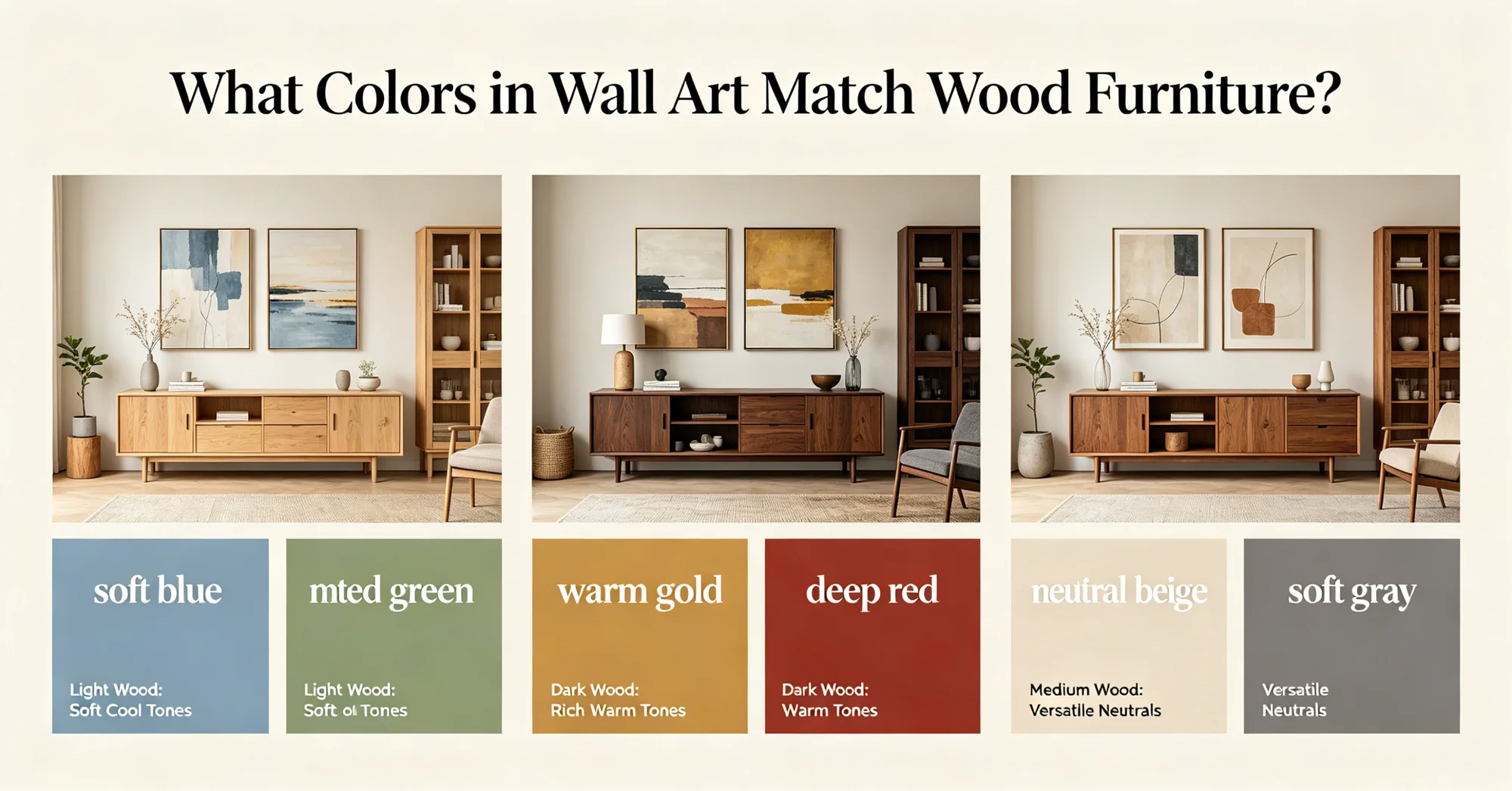
What Colors in Wall Art Match Wood Furniture?
Choosing wall art colors that complement wood furniture depends on wood tone and room light. This guide compares neutral, earth, and cool palettes with sizing and framing advice for US, UK, and Australian homes.

What Wall Art Goes with a Brown Leather Sofa?
Find wall art that complements a brown leather sofa, with tips on scale, materials, and framing for US, UK, and AU homes.
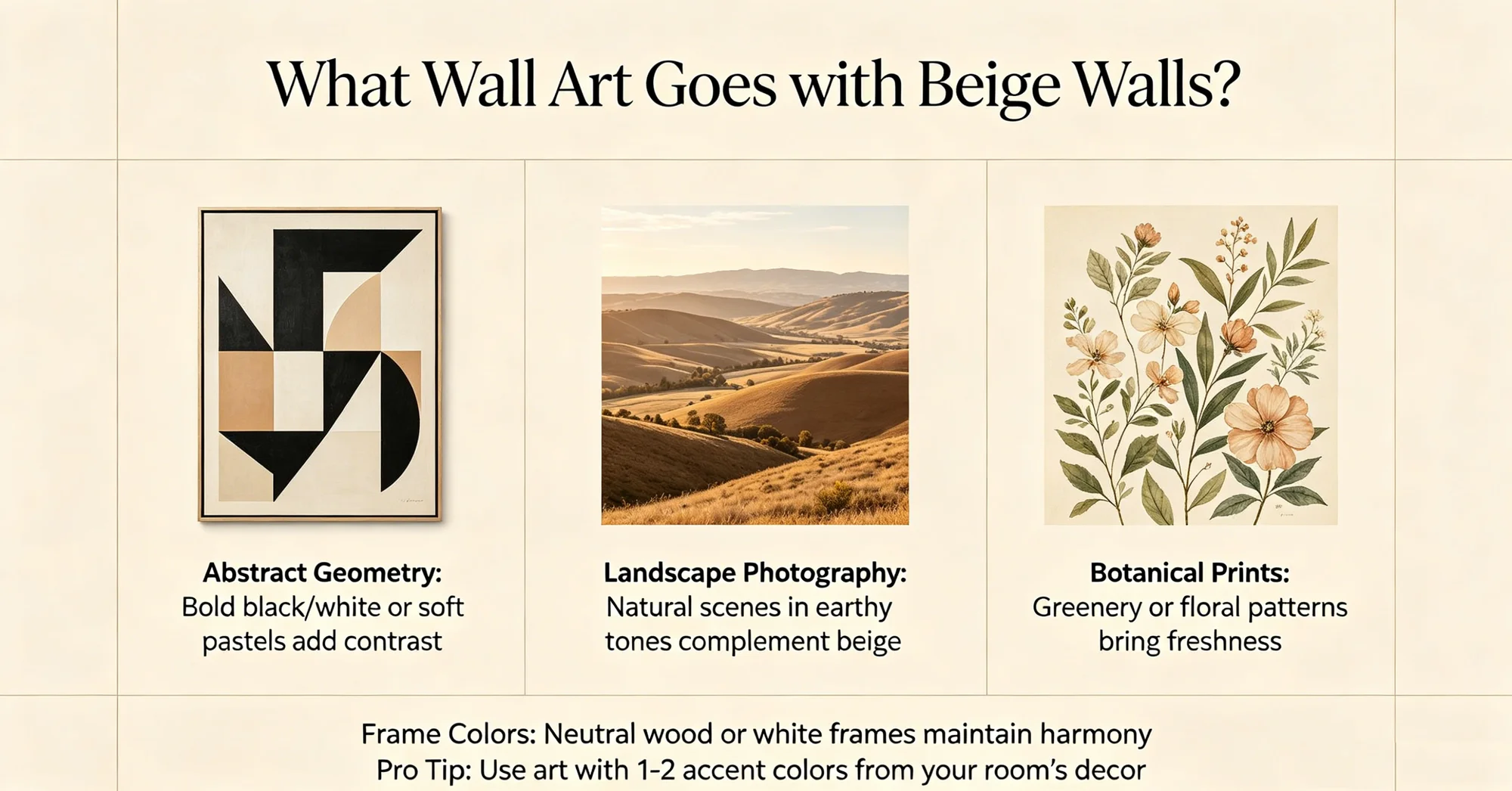
What Wall Art Goes with Beige Walls?
Beige walls are the most common interior backdrop in US, UK, and AU homes. This data-driven guide uses 2025–2026 trends to recommend wall art that complements beige, with sizing, framing, and regional buying advice.
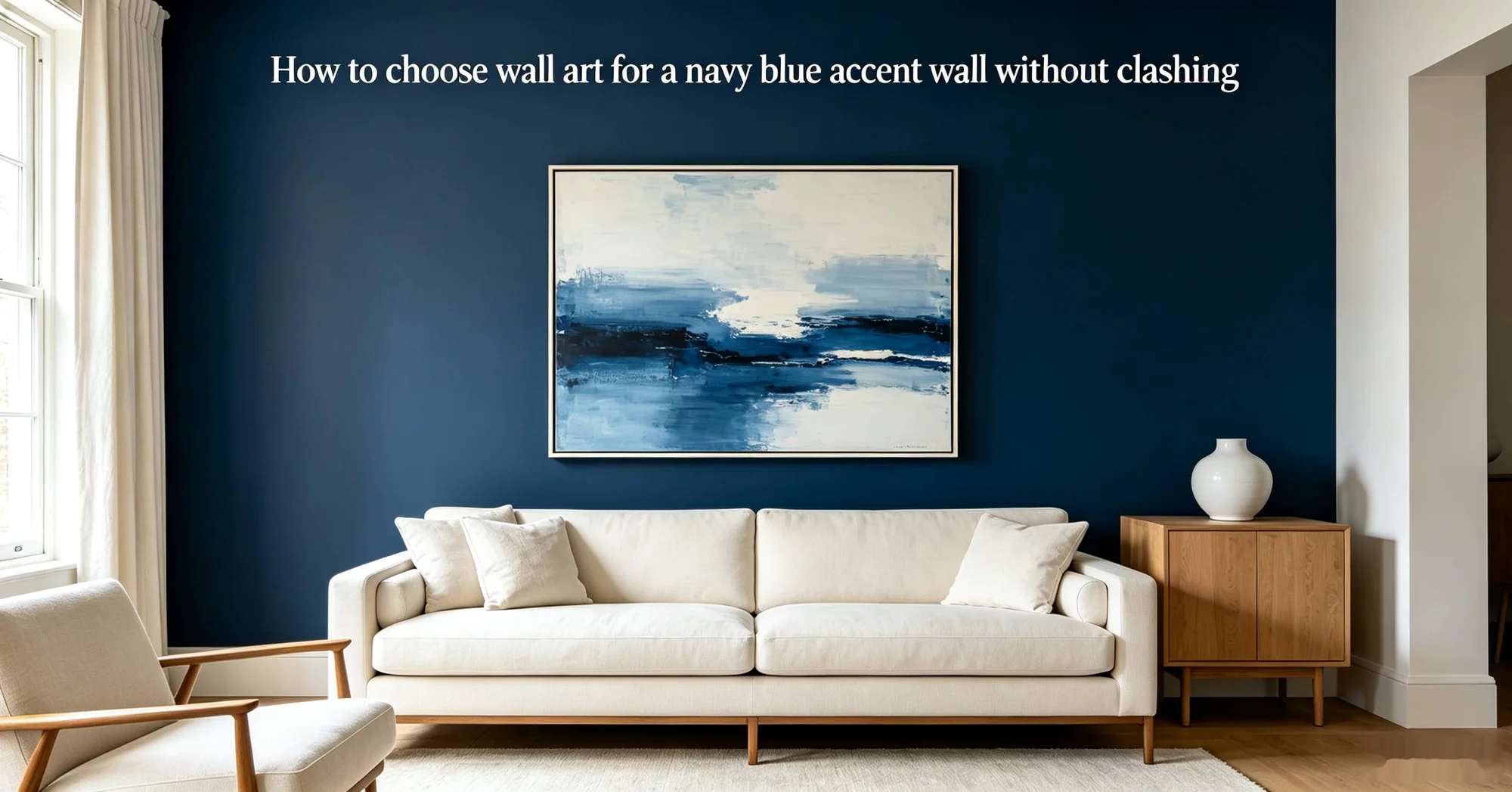
How to choose wall art for a navy blue accent wall without clashing
Navy blue accent walls need art that complements, not competes. Learn sizing, framing, and color rules for a cohesive look in rental bedrooms, living rooms, and more.